








Thermal interface materials

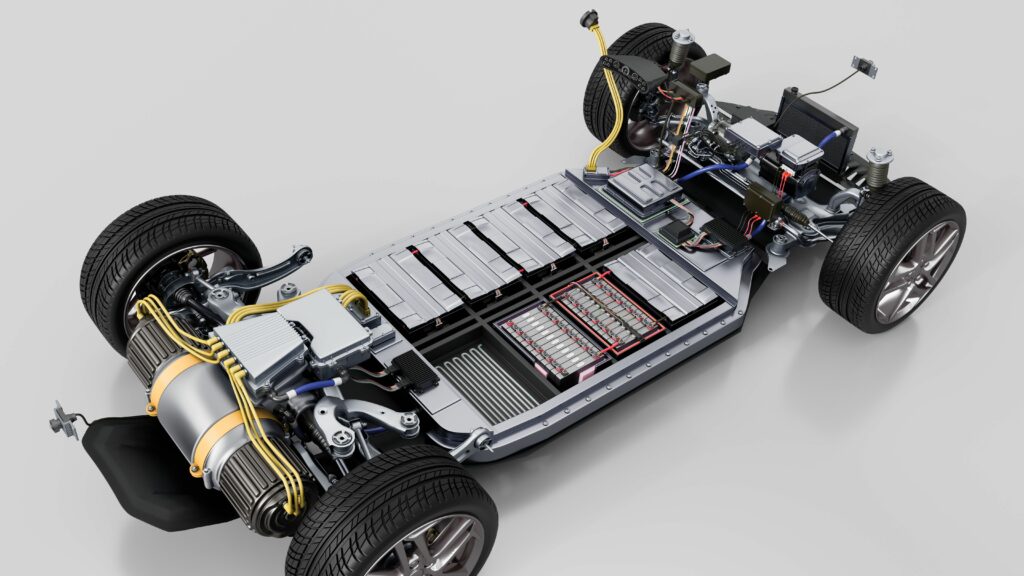
(Image: BYD)
The heat is on
Developments in EVs are increasing the demands made of thermal interface materials. Peter Donaldson investigates what’s hot and what’s not
A thermal interface material (TIM) has a deceptively simple job: to fill the microscopic air gaps between a heat source and a heat sink and allow thermal energy to flow. For decades, this was typically done by a simple material selected from a catalogue based on a single number for bulk thermal conductivity. This is no longer the case. Three converging developments in EVs are driving fundamental changes in these materials.
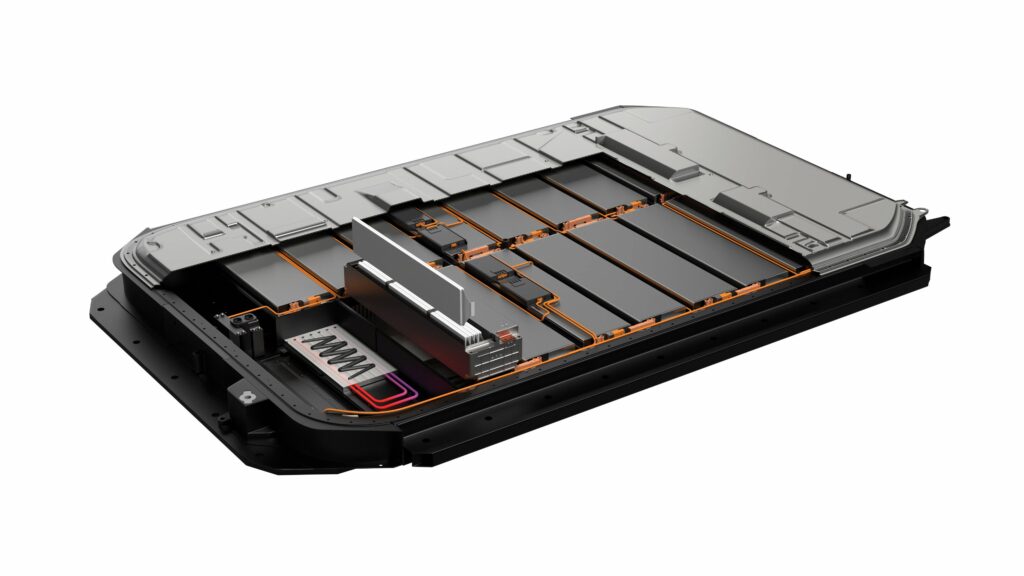
The first is the shift toward cell-to-pack and cell-to-chassis battery architectures. This means that a TIM can no longer be just a thermal conductor between a module and a cooling plate. Instead, it must be a large-area structural adhesive, a high-voltage electrical insulator and a critical line of defence in a thermal runaway event. It must also be dispensed rapidly and guaranteed for the life of the vehicle.
The second is the adoption of wide-bandgap semiconductors such as SiC and GaN in traction inverters, which is pushing junction temperatures beyond 200 C into a realm where traditional organic TIMs fail and even high-lead solders reach their limits. Solutions include sintered silver and copper pastes that transform the interface into a solid metallic bond.
Third, the industry is now thinking beyond initial performance and grappling with the full life cycle. The need is now for TIMs that will hold up for 15 years or more on bumpy roads in salty humidity, yet will cleanly debond so that the battery pack can be repaired, remanufactured or recycled. The simple watts-per-metre-kelvin (W/mK) number denoting thermal conductivity on a datasheet is no longer sufficient.
Key initiatives to balance high thermal performance and thermo-mechanical reliability include polymers designed with either semi-bonding properties, such as next-generation gap fillers, or high-bonding-strength thermally conductive adhesives (TCAs). Depending on the temperature resistance, resin technologies such as polyurethane, epoxy or even silicone could be employed to tackle the different requirements of battery systems, power conversion applications and battery management electronics.
Thermal dielectric trade-off
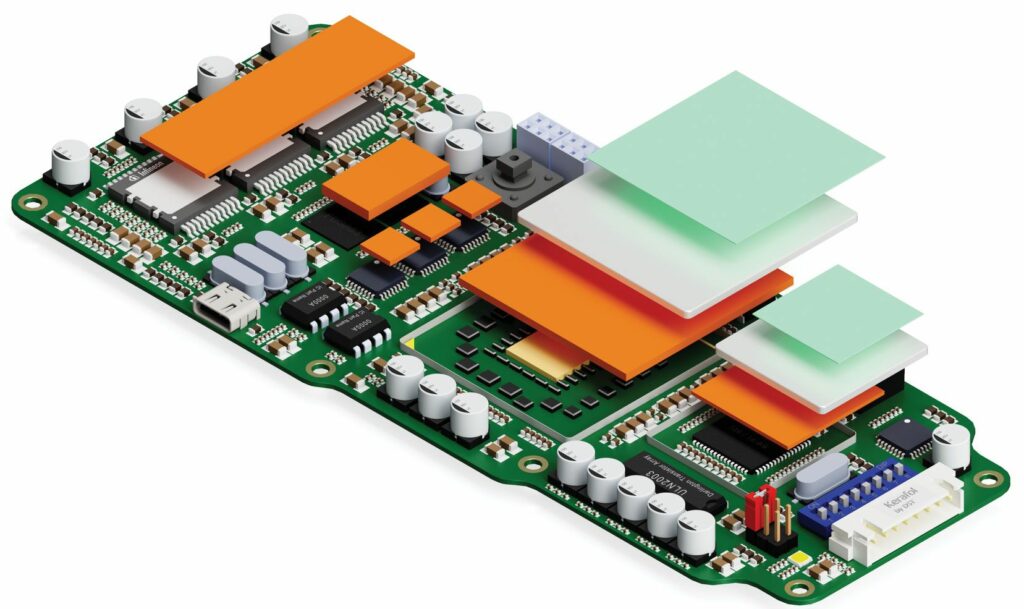
One challenge is that increasing thermal conductivity often comes at the expense of electrical insulation performance in a TIM. In many cases, a single material may no longer be able to optimise both properties simultaneously, making hybrid concepts attractive. Such a hybrid might, for example, combine highly thermally conductive ceramic layers with a very thin thermal interface layer, such as thermal grease or a gap filler – the latter used only to compensate for tolerances and ensure good thermal contact. The exact solution would depend strongly on the tolerance chain and overall layer design, but multilayer approaches could become an important trend for specific applications, with each layer optimised for its individual function.
Another perspective is that the next generation of composites should be centred on novel polymer networks designed to create stronger, more efficient interfaces with both fillers and substrates. Although it is tempting to focus on one or two headline properties, high-performance materials must satisfy a much broader and often competing set of requirements. The real challenge lies in achieving that balance in a way that delivers reliable performance while enabling robust, high-throughput manufacturing.
In cell-to-pack battery designs, the TIM has to serve as a thermal bridge, a structural adhesive and an electrical insulator at the same time. This requirement is pushing development priorities further in the direction of TCAs. Here, the challenge is to find the optimum balance between bonding strength and elasticity when used to join various surfaces and the materials used in next-gen batteries.
(Image: Parker)
The change in TIM development occasioned by cell-to-pack architectures is moving away from maximising thermal conductivity to balancing thermal, mechanical and dielectric reliability over the battery’s service life. The material has to wet large surfaces, compensate for tolerances, bond or support the cells, survive vibration and ageing, and still maintain electrical insulation under compression, humidity and thermal cycling.
The property most difficult to achieve without trade-offs is usually mechanical/structural performance. Once a TIM becomes more adhesive or load-bearing, it tends to become stiffer, harder to rework, more stress-inducing and sometimes less tolerant to cell swelling. Increasing filler content improves thermal conductivity, but can hurt elongation, processability and dielectric robustness. Choosing the right polymer can make a significant difference, and one company is focusing on silicone-based two-component materials that offer very good robustness against swelling and vibration.
Another approach centres on a highly adhesive silicone based on standard gap filler liquid technology, resulting in a TIM that is slightly less strong than a dedicated structural adhesive but strong enough for many structural applications if the system is mechanically robust overall.
Interdependent properties
High thermal conductivity is also difficult to achieve in a material that must have all the benefits of a traditional structural adhesive. The challenge in balancing thermal conductivity against adhesion, dielectric strength, mechanical compliance, durability and manufacturability is especially acute because these properties are deeply interdependent. Improving one often works against another, which is why it is critical for design engineers and scientists to discuss trade-offs and priorities early in the development cycle.
In dealing with this kind of complexity, computational methods such as machine learning are increasingly valuable in material discovery. Such digital tools not only help optimise design and development cycles for leading material creators, but also give customers access to ‘data cubes’ to make use of digital twins in simulating their future battery systems. Use of AI is already helping with the creation of predictive formulations, effectively eliminating the need for real physical trial-and-error iterative formulations.
However, AI needs to be fed with sufficient data and experience for it to work effectively. The challenge with formulating new TIMs is that datasheet values alone don’t provide sufficient information. Among the many additional factors to be considered are surface quality and structure, thermal contact resistance, compression behaviour, and interaction within the complete system. As more data become available, however, it should become much easier to predict TIM performance and tailor it for a given application. The goal is not necessarily for AI to generate the formulation of a material directly, rather it would be more practical for it to define and optimise the requirements. Once the desired performance parameters are clearly described, the TIM manufacturer can then use AI models as tools to support material R&D.

That said, the industry is still a long way from a world in which an engineer can enter a set of requirements and receive a fully optimised, application-ready formulation with no physical iteration. Machine learning, molecular dynamics and related methods are becoming very effective at narrowing the design space, identifying promising chemistries and helping researchers understand trade-offs much earlier in the development cycle.
Where the vision becomes more difficult is in the gap between predicted material performance and real-world application behaviour. The future is less likely to involve design with no physical iteration and more likely to be a highly accelerated development workflow in which computation does most of the screening and optimisation, while targeted testing confirms performance in the real system.
Scaling challenges
A factory producing battery packs or power electronics at scale is very different from a lab that tests TIMs on small coupons. Real EV production introduces additional challenges such as large areas, production tolerances, high cycle times, fast dispense rates, variable gap conditions, facility temperature variations across seasons and tightly timed assembly steps.
This has changed the way in which some test their products, for example building their own battery systems purely to enable them to implement new TIMs and other materials at scale during development, and to run the system under real driving conditions and subject them to rapid charge and discharge events. This provides very early feedback.
(Image: Henkel)
A key insight is that interfaces and processes dominate performance at scale. A TIM – in tape form for example – rarely fails because of its intrinsic conductivity but because real production introduces surface waviness, tolerance stack-ups, non-uniform pressure and high-speed assembly constraints. It is crucial, therefore, to design TIMs from the outset for manufacturing robustness, which includes ensuring fast wet-out under low pressure, tolerance to variation and stable performance across the full production window, including robotic application in final assembly.
One approach to scaling up involves early coupon testing – for compressive properties, thermal conductivity versus compression ratio, and deformation behaviour versus compression – and, in parallel, providing samples for assembly evaluation with customers’ components, enabling validation under real assembly conditions. Throughout the process, it is important to assess performance across all parameters to identify issues, both foreseen and unforeseen, in alignment with standards such as IATF 16949, while also providing customers with detailed background explanations to support their own evaluations.
Regional application centres for batteries represent an innovation in processing materials for production. Such centres also support testing, principally providing early information on production parameters for customers before they order manufacturing equipment.
Focusing on the complete system from day one, therefore, is increasingly important. Early alignment between the TIM and the process equipment, for example involving the dispensing system supplier at an early stage, is increasingly regarded as critical. If material and equipment combinations are already proven from previous projects, many potential issues can be avoided. If the material is new, ‘boundary samples’ for critical parameters can be provided to help define a stable process window.
The goal is not simply to create a TIM that performs well under ideal conditions, but one that remains predictable, scalable and reliable in the non-ideal, high-speed environment where it will be used.
Repair, reuse, recycle
Manufacturability and in-service performance have been joined by repairability and recyclability in the list of key requirements that materials developers must meet – for batteries and many other applications. Several approaches to these circularity requirements are emerging. One of these is debonding on demand, exploiting a variety of trigger mechanisms. For example, there are electrically triggered thermally conductive or structural adhesives to enable repairs and also thermally triggered functional coatings in development to support recyclability.
Rather than needing a trigger, some TIMs inherently support disassembly. Some gap filler liquids, for example, have very good adhesion but can still be separated when needed.
Another approach now under development is a thermally conductive injection moulding compound. Being a thermoplastic, this material promises not only to enable module repair but also to make the TIM itself recyclable – an important breakthrough because conventional TIMs, whether gap fillers, adhesives or gap pads, are generally not recyclable and cannot be reused.
Truly reworkable, high-performance TIMs are achievable, but only if they are treated as a shared design challenge from the beginning. This requires close collaboration between pack design engineers and material developers because reworkability is not something that can be added later without consequence. There will be trade-offs in material performance, and the key is to understand those early so that the final design can strike the right balance between thermal performance, manufacturability and serviceability. Several such materials are now available for EV battery applications.
Reworkability is system-level design challenge. Rather than effortless removal under all conditions, the aim is controlled, predictable debonding without damaging components.
In pursuit of longevity
In striving for efficient use of material resources, longevity is just as important as repairability and recyclability. Developers are being asked to guarantee performance for far longer than they can physically test – often 15 years – so a variety of other predictive approaches are employed. Combining decades of experience with accumulated test data, accelerated stress and ageing tests, plus intelligent digital simulation, is a powerful means of confirming long-term performance.
With accelerated tests, it is important to note that they are meaningful only when they reflect real failure modes, such as loss of contact pressure or interfacial degradation. By pairing this with stable formulations and conservative design margins, credible, physics-based confidence in long-term performance can be instilled.
(Image: Kerafol)
Further, offering guidance on key factors that can influence performance under assembly conditions – such as surface contact ratio and recommended maximum compression levels of the material – supports customers in designing their assembly conditions and enables more robust system-level long-term reliability validation.
Experience with power electronics is particularly helpful in ensuring longevity because TIMs used in these applications are exposed to operating temperatures significantly higher than those found in batteries, often above 150 C.
Mechanical properties such as adhesion can still depend on specific load conditions, but here also materials are typically designed with higher requirements in mind. Performing accelerated ageing tests together with customers is still important, but for silicone-based materials in particular, the thermal stress placed on them in battery systems is usually not the limiting factor. Often, the discussion is less about whether the material can survive 15 years and more about which tests should be performed, how long they should run and what the validation strategy should be.
In second life applications, such as energy storage, battery modules are often rebuilt or integrated into different systems where they are subjected to less-demanding operating conditions than in automotive use, for example lower vibration, and where their service lives may be longer still.
Liquid-cooled electronics
Liquid cooling has become the standard in all but the smallest of EV batteries, while in data centre applications it is moving from racks that hold processing systems to the chips themselves. This is also beginning to be used in very high-power EV inverters, although not in the same way as in data centres. Direct-to-chip cooling relies on the same core TIM principles as other advanced cooling approaches, but its demands are far less forgiving. Because these systems operate at extremely high local heat flux, they require tightly controlled bond-line thickness, excellent cold plate flatness and precise mechanical loading. Even small variations can amplify hotspot severity, increase thermo-mechanical stress and challenge package reliability. Direct-to-chip cooling, therefore, raises the stakes for TIM performance, turning what is often a material choice into a full-system design issue.
As cooling moves closer to the SiC die, the TIM’s role shifts from bulk heat conduction to precision interfacial engineering. Here, ultra-thin bond lines, void-free contact, stress mitigation and reliability under fast thermal transients become critical.
Solid issues
Emerging solid-state batteries promise higher energy density but bring new thermo-mechanical stresses at the interfaces with cooling elements. In today’s lithium-ion cells, TIMs are often designed to accommodate swelling and movement over the battery’s life; however, requirements will be affected by cells that swell in ways different from today’s pouch and prismatic cells.
In solid-state systems, the requirement shifts toward maintaining precise, uniform contact in a much less forgiving mechanical environment. Reduced swelling, for example, means less natural compensation for tolerances, increasing the importance of stable contact under controlled pressure.
It means that the next generation of TIMs will need to do more than simply absorb motion and deliver a tightly controlled balance of compliance, dimensional stability, thermal performance and long-term interface reliability. The challenge becomes less about managing expansion and more about preserving contact where even small changes at the interface can have a much bigger impact than before. TIMs will be valued less for peak conductivity and more for long-term interfacial stability, compliance and predictable mechanical behaviour over the cell’s lifetime.
Also, it is important to distinguish between cell expansion in the horizontal direction, meaning expansion between cells, and the load in the vertical direction, where the TIM is typically located underneath the cells. Expansion is usually more limited vertically, therefore the requirements presented by solid-state batteries probably won’t be a fundamental challenge to TIM developers.
(Image: Henkel)
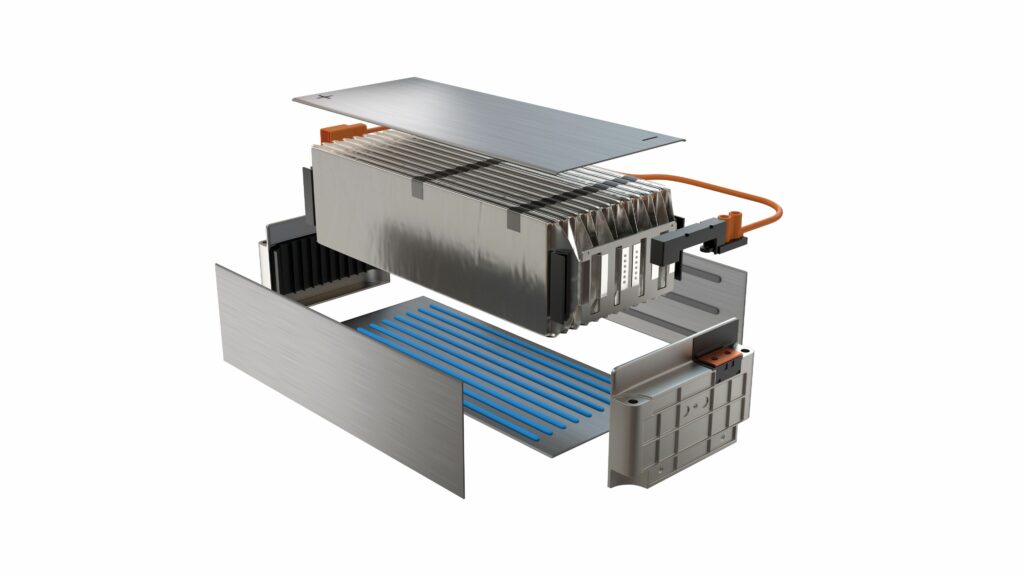
From a thermal management perspective, the effect may be more evolution than disruption. For example, future cell designs may guide expansion into specific areas while limiting it in others. If only part of the cell surface can be used for heat dissipation, the available area may become smaller, but this can be compensated with higher-performance thermal materials.
For the moment, the needs of solid-state batteries seem to be driving development of highly flexible, solid bonding thermally conductive TCAs with thermal conductivity ranging from 1.3 to 2.0 W/mK. As of the time of writing, this is not significantly different from the performance of battery TIMs leading developers are already developing.
Higher energy density will likely increase the demand for better thermal conductivity, but this is already achievable. In power electronics, materials with significantly higher thermal conductivity than those of existing battery TIM solutions are already being used.
As with so many areas of technology related to e-mobility, demands on the performance, manufacturability, extended service life and reduced environmental impact of TIMs are making what were once simple products far more complex in terms of the engineering that goes into them.
Acknowledgements
The author would like to thank Holger Schuh, senior manager, thermal and processing technologies at Henkel; Wolfgang Hoefer, business unite leader at Kerafol; Eric Wyman, business development manager at Parker, and Shane Thompson, engineer manager, electronic materials technology, also at Parker; and experts at Saint-Gobain.
Some suppliers of thermal interface materials
C-Therm
Dow
Gravic Group
HB Fuller
Henkel
KERAFOL
Laird
Parker
Saint-Gobain
Sika
ONLINE PARTNERS