





Reliable sealing of high-voltage battery housings
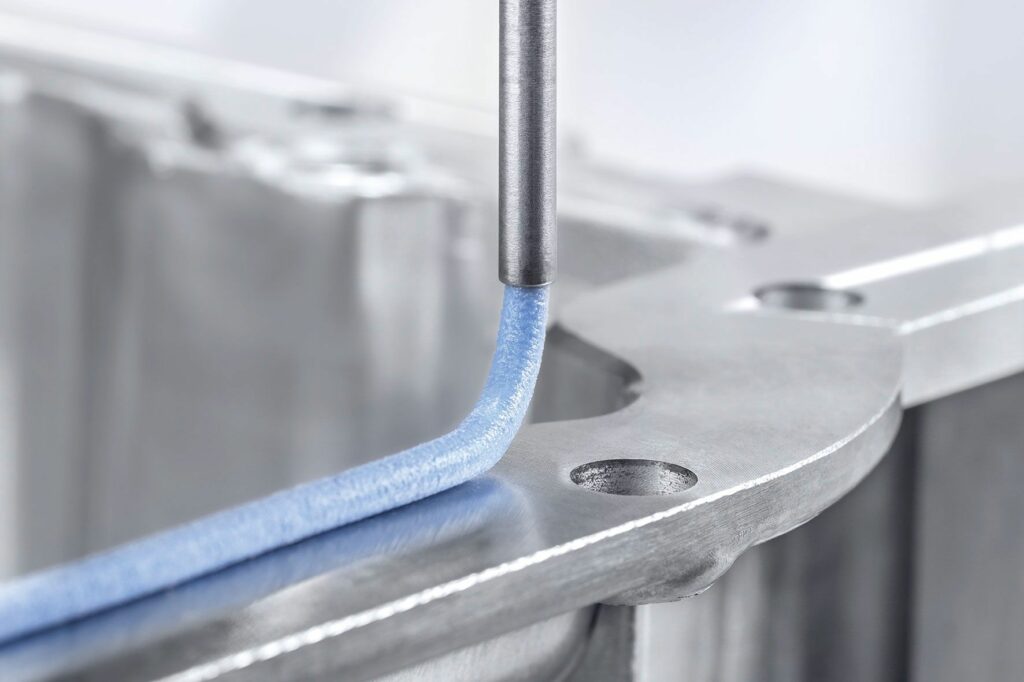
(Image: Wevo Chemie)
Changing regulations are requiring changes to the sealing materials used for high-voltage battery housings, writes Nick Flaherty.
In the event of thermal runaway, high-voltage battery systems can, among other things, generate corrosive gases, high temperatures and significant pressure within a short space of time. Safety-critical components must be designed to withstand all these effects. The same also applies to the sealing of the battery pack, which is typically achieved via the battery housing’s sealing system. With the tightening of safety requirements, this interface is increasingly becoming a focus of attention.
The GB 38031-2025 standard in China is setting new benchmarks for the overall safety of high-voltage batteries. From July 2026, battery systems must be designed and manufactured in such a way as to protect vehicle passengers and emergency services personnel in the event of thermal runaway even more effectively.
A liquid silicone rubber (LSR) has been developed by Wevo Chemie for sealing systems that is tailored specifically to meet these requirements. It provides, among other things, high adhesive strength and mechanical properties with adapted processing properties for reliable automated production processes.
The WEVOSIL 23130 LSR ensures the housing remains airtight by forming a reliable barrier against any gases and smoke that may be released. At the same time, the material is highly resistant to both mechanical and thermal stress.
As a liquid silicone, WEVOSIL 23130 can be applied using the formed-in-place gasket procedure. Compared with cured-in-place gaskets, the chemical adhesion on both sides enables a significantly more robust bond between the sealing material and the standard substrates used for battery housings and cable glands.
The adhesive strength of over 2 MPa is significantly higher than that of many standard materials and ensures that the seal retains its integrity, even when gas pressure inside the housing is high, without any critical decomposition products being formed. It also prevents any ingression of moisture.
The LSR provides a high level of thermal and chemical stability, ensuring resistance to hot and corrosive battery gases.
The filler-free formulation gives the LSR silicone excellent rheological properties, allowing it to be applied precisely using standard mixing and dosing systems as well as static mixers, even on complex 3D geometries.
The material has a long pot life of over 24 hours at room temperature with precisely controllable heat-curing characteristics to ease the production process. After application, localised infrared heating up to 140 C can ensure rapid initial curing (<5 minutes) and adhesion. Simultaneously, there is sufficient processing time to seal large EV battery housings or to allow for any production downtime.
Click here to read the latest issue of E-Mobility Engineering.
ONLINE PARTNERS