





Jurij Kern redefines the car with in‑wheel motors and next‑gen EV architecture
(All images: Elaphe)
Reinventing the wheel – and the entire car to go with it?
Jurij Kern has been on a mission with Elaphe for his entire career – and his work could soon revolutionise the architecture of the automobile. Will Gray finds out more
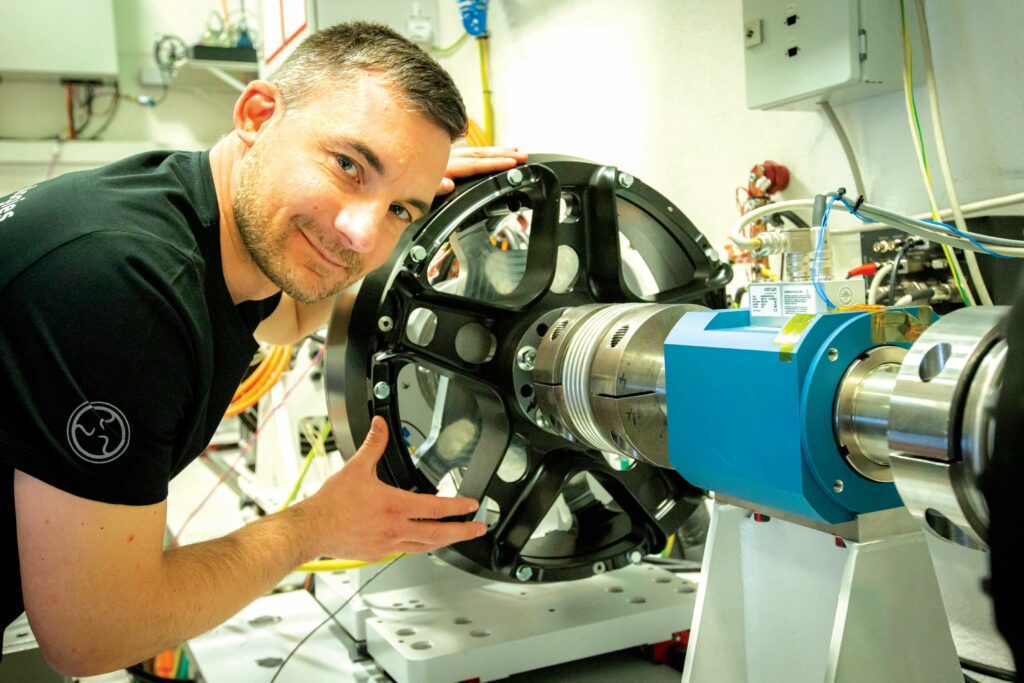
Ever since the dawn of the time of the automobile, it has always had a relatively familiar look. However, the in-wheel motor revolution could be about to change all that – and Jurij Kern has been at the centre of this technology’s development ever since he graduated from university.
Kern joined pioneering developer Elaphe in 2012. The company was six years old when he arrived, operating out of a simple garage that housed a few workbenches and a central couch where the brains of the business developed the concept. “There were people doing design work, winding the motors, gluing the magnets and it got me really intrigued,” he recalls. “It was real concept engineering stuff – you could just do a design on the computer, manufacture the parts and then assemble it yourself.”
At that time, the idea of in-wheel motors for cars and bigger vehicles was in its infancy. Although originally explored by Ferdinand Porsche at the start of the 20th Century, the concept was never progressed because the IC engine dominated the market, but the modern move to electrification has brought it back to the table.
In modern software-defined vehicles, the freedom that individual, low-latency wheel control brings is the real change. The compute increase, and the evolution of EV motors in torque and power density, allow the concept to deliver significant benefits in efficiency and performance, but also considerable reduction in the parts and space required as a whole.
When Kern joined, Elaphe had just built its first proof-of-concept machines – some basic two-wheeled and four-wheeled research projects – but the team was expanding with a view to taking them to industry. “I was a mechanical design engineer working on motor structural parts and did all the technical drawings for integrating the core electric components,” he says.
“As there were still only a few people, I quickly learned I needed to take on other roles – so I was a mechanical design engineer, a process design engineer, a procurement engineer, a project manager, a quality engineer and also an assembly technician! It was a really hands-on experience; the best I could have had to really understand the technology in depth.”
Setting the standards
Originally supported mainly by EU-funded research projects, Elaphe’s turning point came when brake manufacturer Brembo committed to a development project, giving Kern and the team some game-changing insight into the environment of the inner wheel and the temperature, vibrations and shock involved.
“This is not something a typical electric motor has to handle,” explains Kern. “Brembo greatly contributed to our learnings about all the relevant quality standards, and we merged those with our own knowledge and experience to form a specific standard for in-wheel motors – for design requirements and for validation tests.”
Although the team collaborated with partners on a Chinese variant standard, to this day no global standard nor regional standard in the US or Europe exists. Creating their own was an essential part of the process to define product requirements, carry out tests and develop and build testing benches.
The company went on to develop new manufacturing technologies for core production processes – such as automated winding, encapsulation and other techniques – and validation processes for testing, and Kern became the head of quality assurance, responsible for defining the validation strategy and ensuring manufacturing quality.
“In the market of new technologies, people are always looking for a reason to say ‘No’,” says Kern. “It was very important for us to deliver a high-quality and durable product and to ensure consistency even in prototypes, as well as at the volumes of a couple of hundred motors per year that we were producing at the time.
“We outsourced some of the standard tests to accredited laboratories around the world, but we also built our own testing centre for tests that are long-term, resource intensive or very specific to the in-wheel motor – such as long-term thermal cycling tests.”
One of the most crucial parts of the process was to eliminate the two widely acknowledged challenges associated with in-wheel motors – the additional weight they add to the wheels and the severe thermals, vibrations and shocks they have to withstand during operation.
Early studies by universities and automotive engineering companies had already tackled the weight issues. In modern cars, particularly EVs, the ratio between unsprung and sprung mass is generally heavier, so the ratio is favourable even if with additional unsprung mass, but the issue can also be dialled-out further through suspension tuning.
“The spring rate and the damper can be tuned to reach a level that is acceptable for 99% of drivers,” says Kern. “On some high-end vehicles, you can even use active suspension to completely tune-out any remaining effect on ride quality. So, for OEMs who have seriously studied the technology, this myth is debunked.”
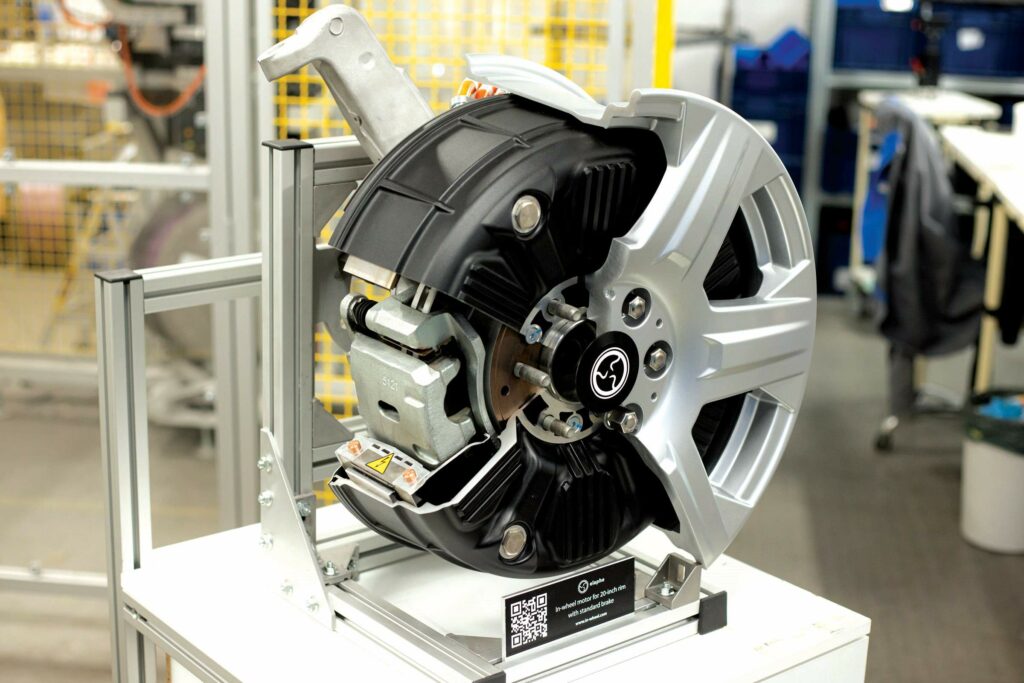
As for handling the extreme inner-wheel conditions, the key was in the design itself, and Kern continues: “We designed it in a way that all the road loads acting on the wheel are carried through the rim and the wheel bearing onto the chassis – exactly as in a conventional wheel. The motor only needs to sustain its own inertial loads, and we are able to optimise for minimal weight and cost.
The design concept has remained more or less the same ever since the project began, with an optimised outer runner machine – the rotor being on the outer side, spinning with the rim – deemed the most efficient way to deliver the highest torque in the space consumed by the machine, providing the highest volumetric and gravimetric torque density.
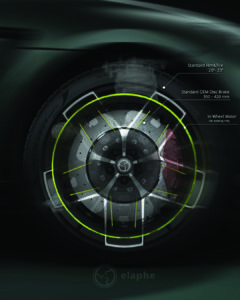
The scalable concept can be refined into different sizes of motors – from a 13 in for small city vehicles to a 21 in for hypercars – and Kern says: “Our key value is that we can integrate the machine within a standard set of components – suspension, bearing, brake and wheel rim. That gives the ability to integrate an electrified system in a car without redesigning the whole architecture.”
Scaling the concept
As the number of EV start-ups grew in the late 2010s, Elaphe struck design and series production deals with two companies to explore two very different applications for their technology – a pickup truck for Lordstown and an efficiency-focused luxury sedan for Lightyear.
“These projects allowed us to start doing lifetime validation of the product on a vehicle level,” says Kern. “Testing the component out of context is one thing, but when you put it on the car, it has the influence of the brake, the wheels, how the thermals are managed on the vehicle, and all this needs to be tested.
“Suddenly, with these projects, our motors were being tested all around the world. We were running durability cycles on vehicles in Heihe in China, Arctic Sweden, Death Valley and Minnesota in the USA and many other places. The experience was very different to a regular car and I was very impressed with the capability of the technology.
As might be expected with the infancy of the project 10–15 years ago, however, there were a lot of failures to handle and improvements to be made. “We went through six generations of improvements – torque and power density, efficiency, durability, reliability,” says Kern. “A lot of effort was put into creating an integrated system that works well in the car environment.”
Change in focus
Kern’s role evolved again in 2022 as he became head of product. But one year later, the money and the market dried up and Lordstown and Lightyear both went bankrupt. Elaphe, left with a reasonably mature technology and a lot of lessons learned, took the opportunity to reset, reorganise and refocus their strategy.
“We had learned a lot about vehicle integration, durability and efficiency and that gave us a new baseline,” recalls Kern. “At that point, we started to look at really identifying the core value of the technology and focused on the fact that an in-wheel motor gives you more space, so you can design the vehicle differently.
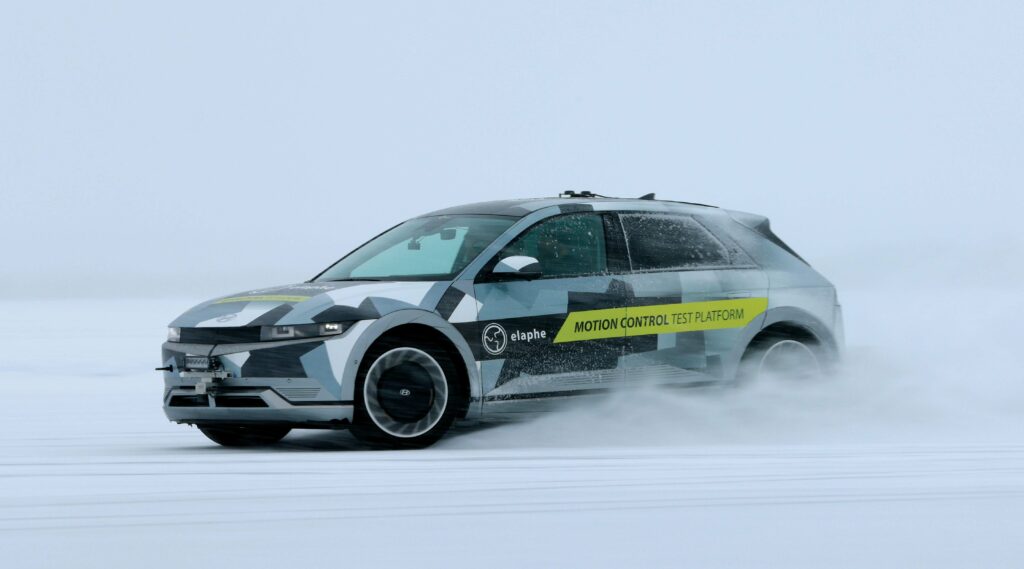
“As it is directly attached at the wheels, you have immediate torque delivery, which enables you to control the wheels with higher precision than you would have in a normal centrally mounted e-motor with driveline torque-transfer limitations. It results in 15% better acceleration and significantly faster cornering. You can smooth out jerks from road surface changes and even emulate mechanical differential behaviour that is indistinguishable from the real system, which is something that cannot be done with conventional e-motors.
“The goal is still the same as it was at the start. We are still evolving that long-term vision, but we really doubled down on our strategy in controls while also continuing to improve the motor hardware. We are no longer just a motor company; we are laying the foundation of an entirely new vehicle architecture.”
By eliminating gear and driveline losses, the more efficient in-wheel motor architecture allows the battery pack size to be reduced – but even greater efficiency benefits can be gained from downsizing the vehicle itself, with elimination of a central electric motor allowing its size reduction and additional battery capacity savings for the same range.
Even if the radical redevelopment of automotive architecture is the end game, Kern’s immediate focus is on developing a product that can get the system to market more quickly, on more familiar, existing architectures.
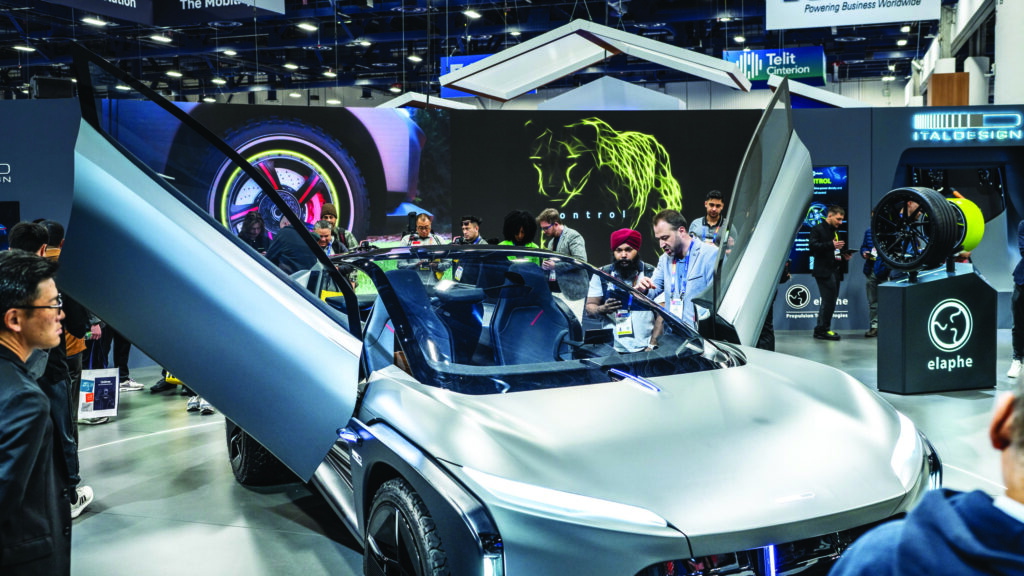
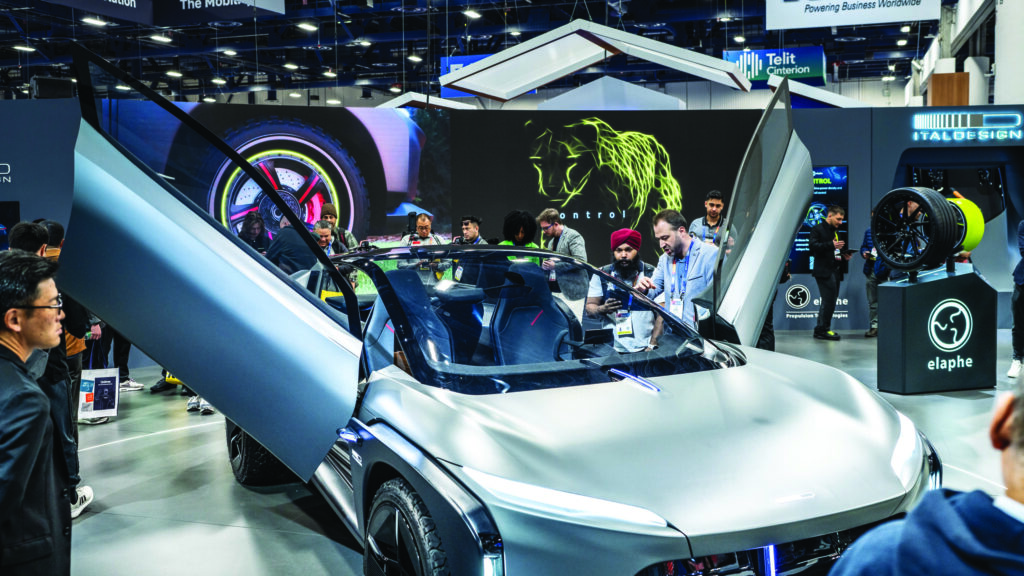
The reveal of the stunning Italdesign Quintessenza at CES demonstrated the potential for in-wheel motors to take hypercars to the next level, and Kern says: “Currently, those markets struggle with EVs because customers are not ready to buy a fully electric hypercar. These vehicles need to excite emotions through the vibrations of the IC engine, the feelings. So, we looked at how we could fit into that and improve the experience.
“Our in-wheel system is very torque-dense and because it is so slim, it can fit into the wheel with existing components. If an OEM wants to make a new sports car based on an existing platform, they don’t need to redevelop the chassis or make a completely new architecture, they can just fit our system with minimal engineering and easily create a hybrid.
“You can use a standard wheel, a standard bearing. There’s some adaptation on the upright and you need space for the onboard power electronics, cables and battery, but compared to a dual e-axle, which needs up to 150 L of space, we need only around 13 L and you not only get the hybrid boost, you also get a vastly improved driving experience.”
Kern and his team are currently working on a project for performance vehicles that he says could be on the market by 2029–2030. They are also working with several OEMs on a more futuristic brief, exploring how together they can evolve the existing layout of the automobile to reap the biggest benefit from this new in-wheel technology.
“To show the advantage in EVs you need to go to a new architecture,” says Kern. “You can optimise the car to be smaller outside, with more space inside, and you can also use the motor with fast control to provide active vertical force on the suspension as a form of dynamic active suspension, all thanks to the control systems we are developing.
“We have been doing vehicle demonstrations in Sweden and we have high-end production vehicles on the market through a company called The Landrovers. OEMs have been testing our technology for years and they see the potential, so we now have excellent traction and many see this as a strategic technology that will enable a new generation of vehicles.”
Affordability is one of the main things holding the technology back right now, but Kern is confident that will come, adding: “On the powertrain level, the supply chains will need to mature and OEMs or Tier 1s will need to scale them so that the technology will become cost-competitive for mass market segments. On a vehicle level, the architecture will need to be designed differently to bring out the vehicle-level cost benefit, which can be significant.
“There are competitors in Germany, Japan and the UK for these types of systems and that is always healthy because firstly, it shows signs of maturity of the market, which brings a confidence level with the customers and secondly, it also pushes us and we push them to further improve the technology and products.
“In that sense, this is all positive – but of course, we are trying to be the best every day in what we do. We seem to be unique in focusing on the vehicle-level control to enable a much better driving experience, so you could say that we are really a system company, not a component provider.
“The new architecture will take longer to develop, but work has already started. We are doing feasibility studies with OEMs to understand use cases and how to bring the benefits because it will not just be the work of Elaphe to bring this architecture to market – it will be a collaboration of Tier 1 suppliers, OEMs and new companies like us.”
So, will that mean a radical change? Kern smiles, concluding: “Visually, it could still resemble a car – of course, it will have seats and maybe a steering wheel – but it will be more spacious for sure, more compact and more aerodynamic. In terms of control, though, I think it might be more similar to a robot than a car…” Watch this space!
Click here to read the latest issue of E-Mobility Engineering.
ONLINE PARTNERS