







In conversation: Richard Morgan
(Image: Richard Heeley / ECC)
Conversion of a petrolhead
CEO Richard Morgan tells Peter Donaldson about Electric Classic Cars’ conversion philosophy
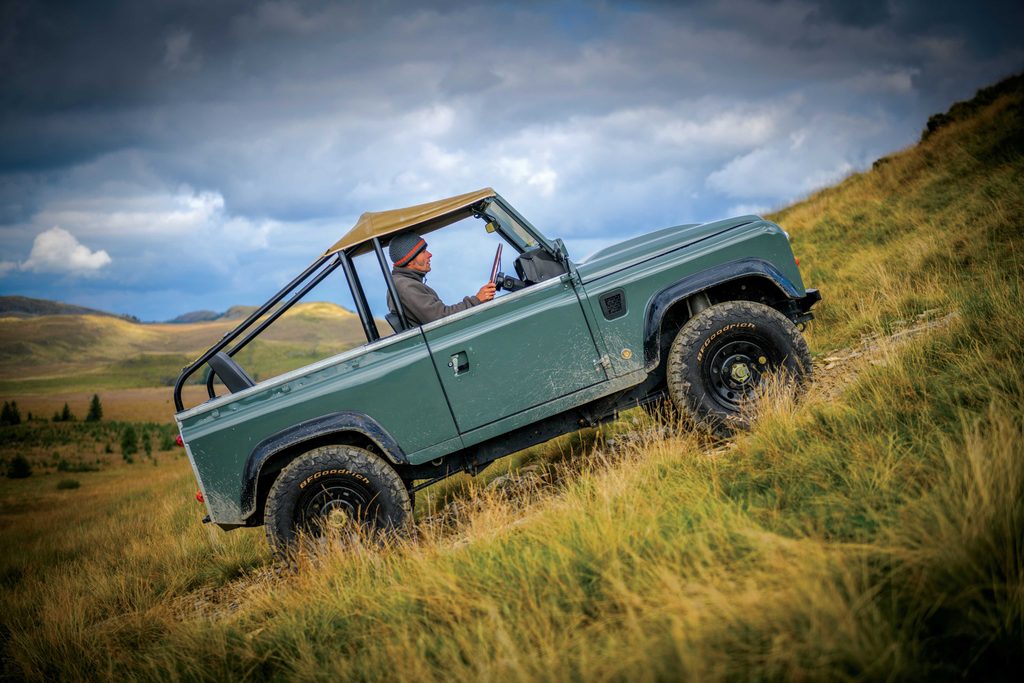
Richard Morgan is not an environmentalist. He’s a former rally driver, a lifelong petrolhead and a man who spent decades building performance engines in his workshop. When he converted his first VW Beetle to electric power, it wasn’t a grand statement about saving the planet; it was simply a way to keep his hands busy after seven years competing in the British Historic Rally Championship came to an end. He’d built engines for decades and was looking for a fresh engineering challenge. “It was nothing more than an engineering exercise,” he affirms.
That was 10 years ago. The Beetle was a hobby project. He had no business plan, no investors and no grand ambitions. He certainly didn’t expect the epiphany he experienced on the Beetle’s first test drive. He turned left onto the main road, put his foot down and was hit by what he describes as a “tsunami of power.” The instant torque was like nothing he’d experienced in decades of building engines. “I just thought, wow! That’s what I’ve been missing. All those race engines I’d built over the decades – they have nothing on this electric motor.”
But what truly caught him off guard was the silence. He drove into the Welsh mountains, and for the first time he could hear the birds, he could hear the sheep. The serene, relaxing drive was a revelation. There was no vibration, no anxiety about overheating, no constant worry that something was about to break. He arrived home with a massive smile on his face.
“I thought, if other people realise how good this is, there’s an opportunity here.” And so, the germ of the idea that became Electric Classic Cars (ECC) was formed.
No cut, no weld
ECC’s conversions are entirely reversible. Morgan calls this his “zero-touch policy.” No cutting, no welding and no irreversible modifications to the original structure are permitted. “Classic cars; they’re not building them anymore,” he explains. “You should respect the infrastructure and the structural integrity of the car.”
The policy also has a practical benefit: it works neatly around the UK’s ‘radically altered’ points system administered by the Driver and Vehicle Licensing Agency, helping conversions avoid the need for Individual Vehicle Approval (IVA) testing. But the real challenge is engineering. You can’t simply cut holes in the floor pan or weld in a new subframe, Morgan emphasises. You must integrate modern battery packs and motors into a chassis never designed for them, using only the existing mounting points.
The process begins with a weight check and a strip down. The team corner-weighs the car in its original form (using four scales – one under each wheel – to determine weight distribution), then removes everything that isn’t needed: engine, gearbox, exhaust, fuel tank, fuel lines, clutch cable etc. The weight saving is staggering. Morgan recalls stripping
475 kg from a Porsche 911 – so much that Porsche enthusiasts online refused to believe it until he posted photographic evidence. From a Jensen Interceptor, they removed the equivalent of a Lotus Elise – 650 kg.
That weight saving creates leeway for the new components within the car’s allowable maximum, but the engineering trade-offs are complex. The battery pack must be mounted securely – capable of withstanding the forces of an impact – but only at structural points designed to carry heavy loads. Engine and gearbox mounts are robust. Fuel tank mounts are designed for the weight of a full tank. These become the anchor points.
But this approach comes with compromises. The available space, the weight distribution and the axle load limits all dictate the maximum battery capacity you can install. Put too much weight on the front of a VW Beetle or a Porsche 911, for example, and you exceed the front axle’s load-carrying capacity. Fit a 65 kWh pack in the back, and its bulk might turn a four-seater into a two-seater.
“You might have to compromise on battery capacity,” he acknowledges. “It’s not an easy path, but it’s just the way I’ve chosen.”
Redhead reborn
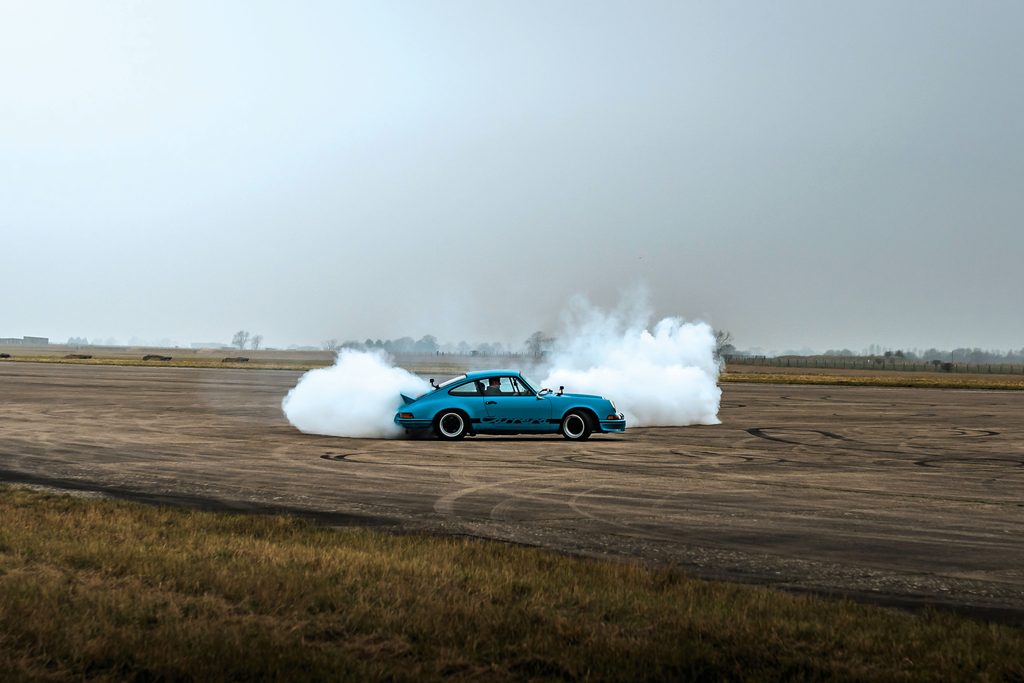
The result is a converted car that, usually, handles better than the original, sometimes dramatically so. Morgan’s relationship with the Ferrari Testarossa – a car for which ECC now offers a kit – began with disappointment. The 1980s supercar was his childhood pin-up, an automotive hero he was finally meeting in the metal. He took the customer’s car out on his usual test route, a twisty Welsh road. He entered a familiar roundabout at his normal speed and halfway around, he realised he wasn’t going to make it. The car was understeering so badly he had to bail out and take an earlier exit than he had planned.
“I was shocked,” he recalls. “I gave the customer a ring and asked: ‘Is this normal?’ He said, ‘Oh yes, they’re not built for handling’.”
The problem, he quickly discovered, was weight distribution. The Testarossa has its engine, gearbox, fuel tank, exhaust system and cooling system all behind the driver. In Morgan’s assessment, it had “worse weight distribution than a 1970s Porsche 911.” The roll centre was high – the engine is above the gearbox and differential – and the handling was compromised.
But the EV conversion offered a unique opportunity. Unlike an engine, which is a single heavy lump, batteries can be treated as ballast. You can distribute them to improve the car’s dynamics. ECC’s solution was elegant: a small battery pack in the front, where the spare wheel used to be, and the main pack just behind the rear bulkhead. The Tesla motor was flipped on its back, placing it in front of the rear axle. From the axle back, there was virtually nothing, he explains. The weight distribution was transformed to a near-ideal 45:55 split.
But that was only part of the solution. A new weight distribution required new suspension. ECC installed a semi-active system from TracTive – the same type used on Pagani Zonda hypercars. They upgraded the brakes and fitted wider, lower-profile tyres to handle the increased power. The original wheels were a problem too: the correct tyre sizes simply aren’t manufactured anymore, so aftermarket wheels were necessary.
(Image: ECC)
The result is a car that Morgan describes as handling “like a modern supercar should.” The ultimate validation came from a Ferrari owner who drove one of ECC’s conversions. “He said it literally drives better than his modern Ferrari,” Morgan recalls with satisfaction.
Engineering foundation
When Morgan first entered the EV conversion industry, he saw a problem. Anyone with a welder and a second-hand Tesla motor could attempt a conversion in their shed. Some of what he witnessed was alarming: battery boxes made from wood, high-voltage cables routed with no regard for safety and systems that would become death traps in a collision.
“I’ve seen some battery boxes made out of wood with a perspex lid so you can see all the stuff inside because it looks cool,” he says. “That’s not a good idea.”
He became an advocate for regulation to ensure safety. Working with the Historic and Classic Vehicles Alliance, Morgan helped create a set of engineering standards to which members must adhere. These are based on the international ECE R100 Rev1 standard – the same framework used for low-volume manufacturers and kit cars going through IVA testing.
The standards cover critical safety systems. Isolation monitoring constantly checks for high-voltage leakage to the chassis, ensuring no dangerous current is finding an unintended path. An inertial impact switch immediately opens the high-voltage contactors in the event of a collision. Battery boxes must meet specifications for thickness, strength and mounting integrity to prevent penetration in a crash. Cable routing must account for bend radii and protection from abrasion.
But how do you validate these systems without crash-testing a 50-year-old car? The closest ECC has come was an unintended test resulting from the theft of Morgan’s personal VW bus last year. The thieves rolled it and the bus ended up on its roof after a significant impact.
The substantial 100 kWh battery pack remained secure – the mounts held. The cable management was intact and, crucially, the inertia switch had triggered, shutting down all the high-voltage systems.
“It wasn’t nice to see the car upside down and crashed,” he admits. “But it was definitely nice to see that our safety systems had worked.”
Skateboard game changer
For years, Morgan worked within the constraints of classic car architectures. He improved weight distribution, upgraded suspension and fitted modern brakes. But there was always a limit. Even with perfect weight distribution, converting an old car still means working within the confines of the original chassis architecture. “At the end of the day, it’s still putting lipstick on a pig as far as some cars are concerned,” as Morgan colourfully puts it.
The frustration led to a radical new concept. If you can’t make the original chassis handle like a modern car, build a new one – and ECC has gone down the skateboard route.
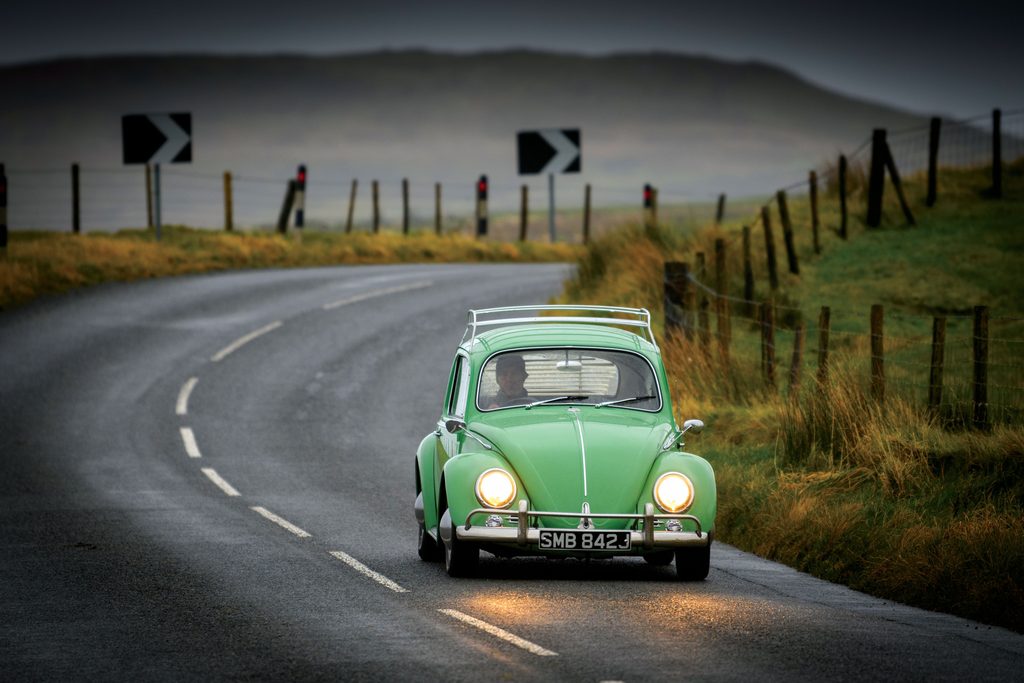
The idea is simple but transformative. Take a classic body – a Land Rover Defender, an AC Cobra, a Porsche 356 – and lift it off its original frame. Then, drop it onto a brand-new, purpose-built skateboard chassis. This new chassis features modern multi-link suspension, modern brakes and an optimally placed battery pack. The result is a vehicle that looks like a 1960s icon but drives like a modern BMW 5 Series. It’s a new car with a new registration plate, wearing a classic body.
The first time Morgan drove a Defender on the EV skateboard chassis, he was stunned. He took it around a familiar roundabout and realised something was wrong. His brain expected the usual understeer, the typical wallow. Instead, the car went around the corner flat and composed. “I didn’t go through the hedge,” he laughs. “Normally I’d have crashed by now.”
(Image: Richard Heeley / ECC)
But the skateboard chassis isn’t just about handling, it’s also about scalability. Morgan realised that many classic 4x4s share similar wheelbases.
A Ford Bronco has a 92 in wheelbase; that of a Defender 90 is around 93 in; a Toyota FJ and an International Scout are in the same ballpark; and 110 in covers the Series 3 Land Rover 110s and Range Rover Classic LSEs etc. By grouping vehicles into common platforms by wheelbase, ECC can productionise the chassis.
The only thing that changes between the variants is the length of the centre section, which determines the battery capacity. A shorter wheelbase gets a smaller pack and a longer one gets more range. The suspension, motor mounts and brake systems remain identical.
This modularity has transformed the business. Instead of one-off builds, ECC is now taking orders for batches of five or 10 skateboard chassis. They’re outsourcing the manufacturing to a specialist chassis company.
“We’re moving from being a conversion shop to a platform developer,” he explains. It’s a shift that opens up new markets – in the US, the UK and eventually Europe.
Following a passion
Morgan’s path to ECC was anything but conventional. He holds a degree in manufacturing systems engineering, and his first career was in energy management. He spent years helping large organisations such as Walmart, Tesco and British Telecom reduce their energy consumption.
But at the weekends, he was a different man. He was a rally driver, a classic car modifier, a man who’d spend his Saturdays under a bonnet and his Sundays at car shows. “I was saving carbon in the daytime,” he jokes, “and putting it back up there in the weekends with my rally car. I was pretty much carbon neutral.”
That foundation – a deep understanding of energy systems combined with a lifelong passion for cars – proved invaluable when he pivoted to EV conversions. He already understood the fundamentals of electric power; he just needed to apply them to a new context.
The business model that emerged is unique. For a one-off conversion – a car ECC has never worked on before – the client is effectively funding the R&D. The cost reflects the bespoke engineering required to design mounts, cooling systems and battery packaging from scratch. It’s what Morgan calls a “21st century hot rod,” a unique creation built to a single customer’s specification.
Kits are different – and scalable. Once ECC has developed a conversion for a particular model, they can amortise the R&D costs over a production run. A kit might sell 10 or 20 units a year, spreading the development cost and making the conversion more accessible.
Supply chain robustness is critical. Morgan learned early that you can’t rely on components that might be discontinued next year. Tesla drive units are ideal because they are robust and readily available. Battery modules are standardised around VDA and MEB form factors. Suppliers are chosen not just for their products, but for their reliability and support.
“We’re effectively a small production line,” Morgan explains. “If we can’t get motors for five weeks, we can’t just send everyone on holiday.”
The Countach & the desert
When Morgan looks to the future, he sees a Lamborghini Countach. As a pin-up car from his childhood, it had an even more important place than the Testarossa did, but when he finally drove one, the reality was crushing. “It was awful,” he admits. “Never meet your heroes!”
The driving position was wrong, the clutch impossibly heavy and the V12 baked the driver. But an EV conversion should fix everything: remove the transmission tunnel, move the bulkhead back and add a small front battery pack for weight distribution. The Countach would become what it always should have been in Morgan’s view: a practical, daily-drivable supercar.
That desire to drive, not just collect, defines Morgan’s philosophy. He’s planning a road trip to the Sahara in his electric VW bus with his 80-year-old motorcyclist father. The bike, a Zero SRS, will be clamped to the back whenever Morgan senior prefers to travel in the bus. EV drivetrains make the vehicles reliable enough for the journey. “I wouldn’t do that if it was petrol powered,” he says. “With an EV, you just relax.” That’s the point. Not every classic should be electric, but the ones that are become tools for adventure, not museum pieces.
Richard ‘Moggy’ Morgan
Born in 1973 in Chester, North West England, Richard ‘Moggy’ Morgan grew up in Llanidloes in the county of Powys, mid-Wales. He also went to school there and developed an interest in science, which dovetailed with his emerging passion for cars. He earned a Bachelor of Engineering degree with Honours in Manufacturing Systems Engineering from the University of Hertfordshire, which led to a career in energy efficiency at EnergyICT Ltd.
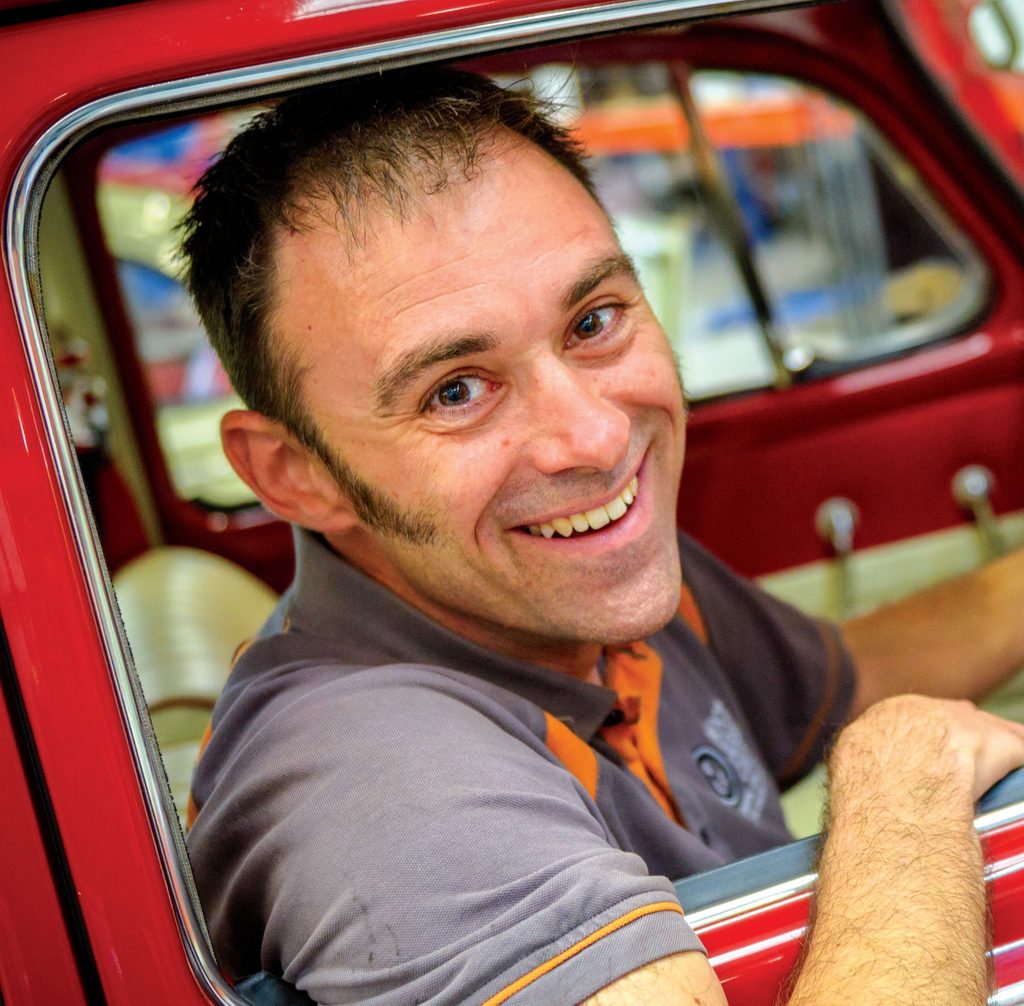
In his spare time, he competed in the British Historic Rally Championship for seven seasons, driving a mid-engined Porsche 914, reluctantly leaving the sport in 2015 because of rising costs.
He started Electric Classic Cars in 2015/16 and now serves as CEO in an enterprise he regards as a labour of love. Asked about hobbies and passions beyond work, he admits that they amount to “cars, cars and more cars.”
Click here to read the latest issue of E-Mobility Engineering.
ONLINE PARTNERS