




SeLv project
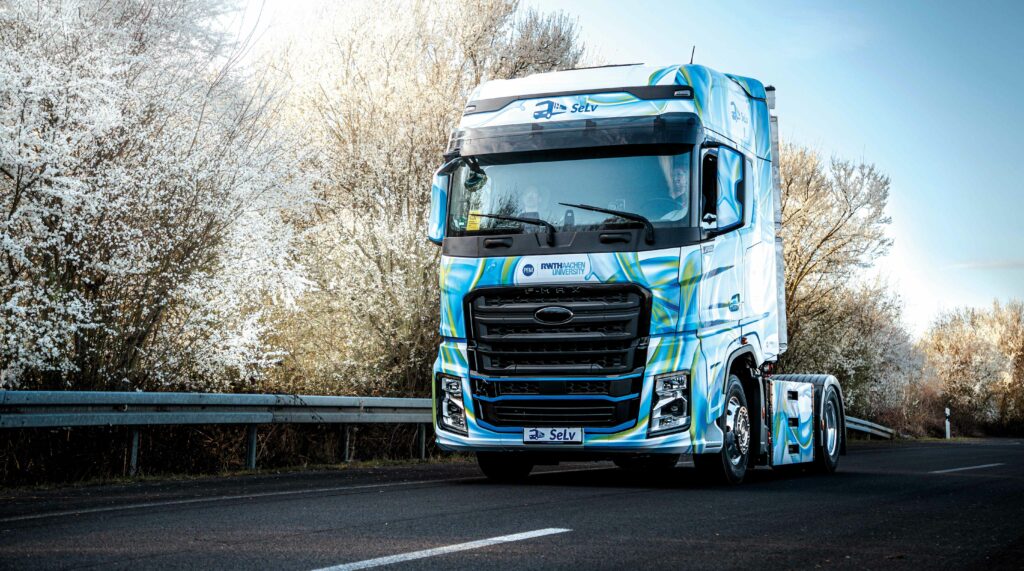
The five-year SeLv project combined hydrogen fuel cells and batteries to tackle the challenge of eliminating emissions from long-distance haulage. Will Gray reports
The long-distance haulage sector is one of the most challenging of all when it comes to eliminating carbon emissions. Not only are the vehicles extremely heavy, even before the addition of any battery weight, but in a world where schedules are precision-planned and operational profits are closely coupled to delivery times, the need for regular charging to keep loads on the roads is not particularly of commercial appeal.
Pure battery electric approaches are being explored, but they need large batteries – typically from 600–1000 kWh – to provide enough power, and although they are efficient, the added weight and long charging times, even with megawatt charging, are both significant barriers to be overcome. As an alternative, some manufacturers are exploring fuel cell trucks that use a large fuel cell to deliver most of the traction power – 300 kW or more – alongside a battery that acts as a buffer for peak loads. The drawback, however, is that the fuel cell has to follow fast power transients, increasing system complexity, and the large hydrogen tank stacks that are required bring major thermal management and integration challenges.
There is, however, another alternative. Through the early 2020s, a team of engineers at RWTH Aachen University, funded by the German Federal Ministry of Transport, has been developing its SeLv concept, using a smaller fuel cell as a range extender alongside a larger battery. The fuel cell supplies near-continuous power to meet the average energy demand, while the battery handles transient loads, maximising regenerative braking efficiency and managing sudden high-power demands such as acceleration or hill climbing.
The SeLv project followed on from Aachen’s successful development of the StreetScooter, an all-electric light commercial vehicle designed specifically to fill a gap in the commercial EV market for short-range, urban logistics, last-mile delivery and courier services. Under the leadership of Professor Achim Kampker, the project team aimed to radically improve the efficiency of vehicle development — as Kampker noted at the time, they were “significantly more efficient than usual, requiring only one-tenth of the typical development costs and half the time.” The spin-off of that project was later acquired by DHL Group in 2014, and today more than 15,000 of these vehicles are in use with Deutsche Post.
“StreetScooter showed that it was possible to develop and industrialise electric commercial vehicles in a relatively short time and with a very pragmatic engineering approach,” recalls Maximilian Bayerlein, group lead of Alternative Powertrain Technologies. “We had several other projects on electric trucks and that experience had a big influence on many of the later projects in Aachen. When we started looking more seriously at electrifying heavy-duty trucks, there was already a lot of know-how available from colleagues who had worked at StreetScooter, particularly in areas like vehicle integration, electric powertrains and rapid prototyping.
“Some of those experienced engineers went on to participate in the SeLv project. So, the team was a good mix of people with hands-on experience of EV development and younger engineers bringing new ideas and perspectives. At the time we started development, around 2019, there was a strong expectation that the number of electrified vehicles would increase very rapidly and that OEM production capacity might struggle to keep up with demand. So, we chose to explore the idea of retrofitting existing diesel trucks as a transitional solution.”
Range extenders had already been seen in battery electric passenger cars – with a small petrol or diesel engine used to charge the battery – but the innovation here was in how the team adapted the concept to meet the specific requirements of long-haul trucks and incorporated hydrogen to achieve a balance between cost, efficiency and complexity.
Using the fuel cell as a range extender, with the battery handling dynamic power, allows the size of the fuel cell and hydrogen storage tanks to be reduced, whilst still meeting the peak power requirements. This allows the fuel cell to run in a relatively stable operating range – which is beneficial for durability and thermal management – and the entire system is both cost-effective and easier to integrate. It also enables regenerative braking to be optimised because the battery can be managed to reserve capacity for all the energy created, rather than having to dissipate some through brake resistors when the battery is full, as is the case on trucks like the Mercedes-Benz eActros 600 and GenH2 and the Hyundai XCIENT.
“I think we really hit the spot with our set-up,” says Bayerlein. “Charging on pure battery electric haulage trucks is a major issue because of how the vehicles are operated. When they are going from A to B to C, the places they tend to stop usually don’t have hubs to recharge – but by using the hydrogen fuel cell as a range extender, we provide added flexibility, allowing the vehicle to go for at least one day, maybe two, without needing to stick to a charging process.
“The ability to reserve 15–20% of the 368 kWh battery capacity as a buffer for regenerative braking energy is also a key advantage. In typical scenarios, such as descending a 6% grade at 80 km/h, a single event generates 20–40 kWh – well within the buffer reserved – and our custom modular drivetrain serves as the primary retarder, capable of 474 kW peak power and 385-400 kW continuous over extended braking periods. The overall round-trip drivetrain efficiency is 90–94% when combining the motor, inverter, transmission, DC–DC and battery. So, we can recover up to 20–30% of the truck’s energy use over a duty cycle, depending on route profile.
“That reduces our hydrogen consumption further, which impacts on the tank size and fuel cell requirements, and having a much lower fuel cell power also reduces the usual challenges of thermal management and integration. Ultimately, the key to success is in defining the system balance, and finding the optimal combination of battery capacity, fuel cell size, thermal management effort and overall system cost.”
(Image: Erich Friedrich)
Drivetrain design
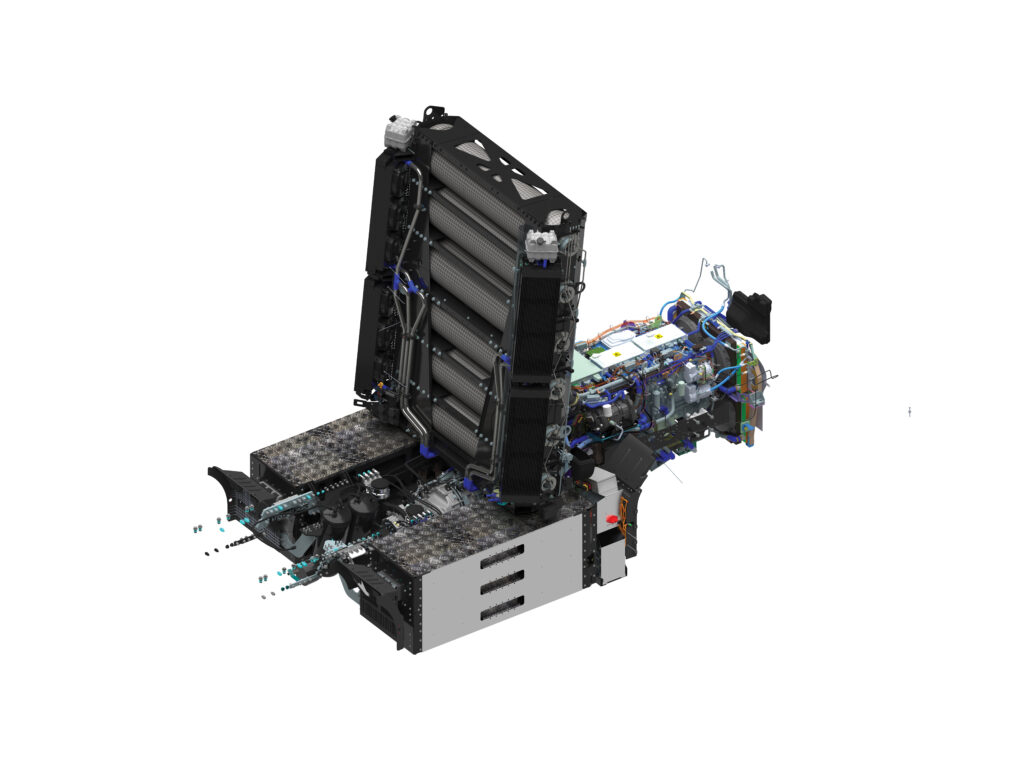
The SeLv drivetrain was developed on a modular concept, partially to optimise flexibility for retrofitting and partially to optimise production efficiency. During the initial concept designs, the team identified four different assembly groups – fuel cell, battery, drivetrain and tank bridge – and separated them out to allow the base design to be easily modified by adding or removing elements, thereby providing a cost-effective way to adapt the concept to suit different applications, including off-highway mobility.
The complexity of heavy-duty vehicle design means that, even five years on from the start of the project, there is still no identified preferred approach to drivetrain set-up in this sector. As a result, the early stages of development saw the team explore a variety of different concepts, with several PhD students evaluating the optimal driving topology. This included looking at single and twin motors and exploring locations directly at the wheel, centrally mounted and on an e-axle.
Initially, the e-axle approach was preferred, mainly owing to component availability, but the final solution adopted was to use two centrally mounted Cascadia Motion iM-425 integrated modules, which combine CM350SiC inverters with BorgWarner’s HVH410 permanent magnet synchronous motor. The modules are designed specifically for Class 6–8 vehicles and provide peak torque of 2700 Nm up to around 1500 rpm (1580 Nm continuous) and peak power of 425 kW at around 2000 rpm (280 kW continuous). Each one weighs 190 kg and has an overall axial length of 420 mm, height of 546 mm and sump depth of 296 mm.
(Image: Clemens Niederée)
“The unique aspect is how we stacked the two units together,” says PEM scientific assistant Tarik Hadzovic. “We synchronised them so that the output shaft of one is the input shaft of the other, giving us the flexibility to select optimal operating points for efficiency or performance. We also integrated the motors with our thermal management system so we can use innovative operation modes.
“For example, you can take full power from both, you can take 75% of the power from one and 25% from the other, or you can use one as a motor and have the other one working as a generator. In that case, most of the energy from the motor is captured by the generator and the remainder can be used to heat the cabin, enhancing overall energy efficiency and system integration. It all results in a drivetrain that’s flexible, efficient and tightly coupled to thermal management – which is what sets it apart within the industry.”
The motors feed out through a three-speed transmission with a ratio of 22.7 for high torque and low speed and 3.5 for higher speeds. The third, direct-drive option, is made possible because the input and output shafts are coaxial, allowing them to simply be coupled to avoid gearbox losses. From the transmission, a Cardan shaft then takes power to the final drive via the differential.
The system voltage level is 650 V, with the twin stacking motors more than capable of meeting the necessary power, even with lower system voltages. The SiC inverters offer higher efficiency, higher switching frequency and better power density than other inverters on the market that use conventional silicon devices – such as DZ / doublezerosequence-modulated IGBT or MOSFET inverters – but they do come with the downside of higher device price and a need for more careful EMC layout work.
The team briefly evaluated the option of implementing a load-shifting approach on the two synchronised motors, making use of that aforementioned flexibility, but while the concept showed promise, it was ultimately decided to stick with a simpler approach. “I think you can get some efficiency gains there,” says Bayerlein. “The basic concept is that you intentionally operate the motor at a more efficient operating point than what the instantaneous power demand would require. The surplus energy is then stored temporarily in the battery. Later, when the power demand increases, the battery can supply part of the required power – so the main energy converter can spend more time operating at higher efficiency.
“On an electric motor, its efficiency depends not only on torque but also on rotational speed, so the efficiency map is effectively three-dimensional when you consider the operating range of the drivetrain. That offers opportunities to move the operating point toward a more efficient region by using the battery as a buffer.
“The approach is most attractive when the component efficiency maps have pronounced optimal regions, which is why it could be particularly interesting for hybrid or fuel cell battery vehicles, both in passenger cars and in heavy-duty applications. We decided that the additional control complexity was not justified for our initial concept, but it is definitely an area where further research could be done to explore how much efficiency improvement can realistically be achieved, especially combined with predictive energy management.”
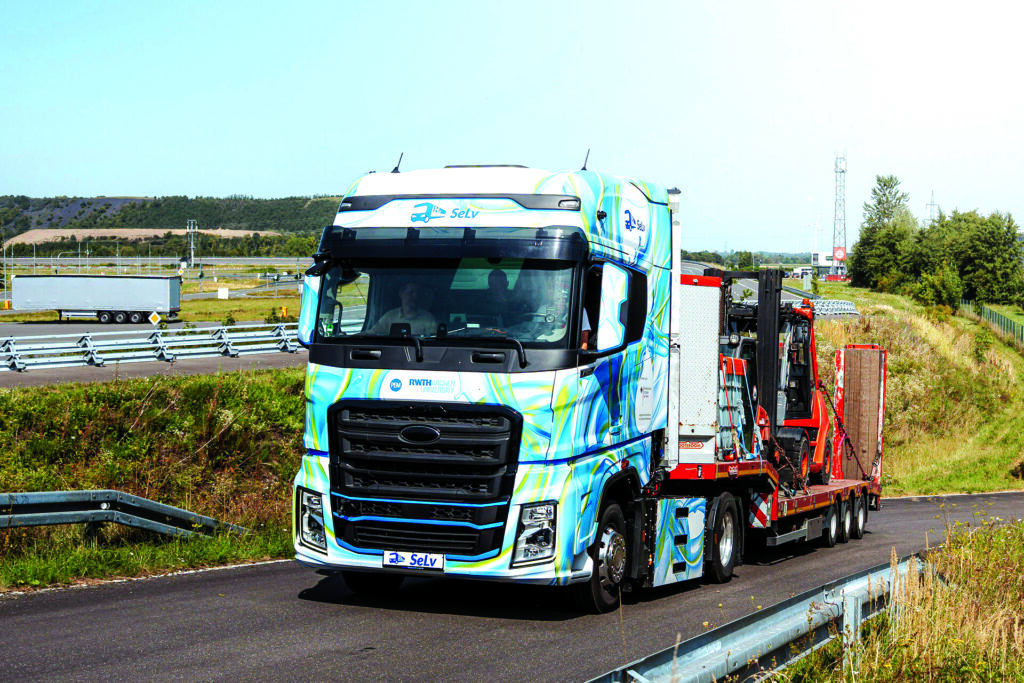
(Image: Clemens Niederée)
Battery and fuel cells
The SeLv has six battery packs in total – three on each side of the vehicle – made up of high-performance lithium iron phosphate (LFP) batteries with standard prismatic cells. These are provided by one of the world’s largest EV battery manufacturers, Contemporary Amperex Technology Ltd. The LFP chemistry enables a four times higher cycle rate compared with nickel manganese cobalt (NMC), giving a capability of around 20,000 cycles, which is one of the main reasons for their selection because one of the development goals was to create a system capable of covering 1.2 million lifetime kilometres.
As the vehicle is still a prototype, the specific battery specifications are perhaps less interesting than the manner in which the battery is operated – because the range extender concept puts it under a constant heavy load. Bayerlein says that the unique near-continuous charging approach does not significantly affect battery longevity because the system has been set up such that charging is carried out at the most efficient timing, and during the most efficient point in the cycle, for the battery to maintain its best condition.
“We are constantly using the battery, but while it’s got more energy coming out and in, it’s not that much more power overall, so it only applies a few more cycles to the battery lifetime,” he explains. “The range extender aims to supply the average power demand and the peaks just stay for up to 30 s. So, it’s mostly done in a continuous way, which helps the battery, and we also try to stick within 30–70% state of charge as much as possible.”
Alongside the batteries, the vehicle houses a pair of Toyota TFCM2 fuel cells, which use Type 1 Grade D hydrogen at pressure of between 0.71 and 1.6 MPa. These come in two shape forms – box and flat – and the flat version was chosen because the two units fitted together perfectly in the engine compartment, with each measuring 1.27 m long, 63 cm wide and 41 cm high. They are rated for 85 kW of power, idling at up to 10 kW, with a 16 s start-up time and a 40 kW/s response time.
The fuel cells are coupled to a tank bridge containing six individual hydrogen tanks, which operate on the market-standard high-pressure 35 MPa (350 bar) storage system that is commonly found on hydrogen buses and heavy-duty applications. The team did explore the use of a higher pressure 70 MPa (700 bar) system, which offers a significantly higher storage density – around 60–80% greater than that at 350 bar – and enables faster refuelling. However, this option was not pursued because there is no established refuelling standard or infrastructure for 700 bar systems in heavy-duty trucking. The same fuel cell and tank set-up is used on the 40 tonne VDL Toyota hydrogen fuel cell truck developed by VDL Groep in the Netherlands.
The additional auxiliary components that were previously mounted to the internal combustion engine on the conventional truck and driven with the belt – such as the compressor and the power steering pump – were electrified and attached to the fuel cell block instead. The power steering pump is safety critical and the initial high-voltage component design was replaced by a low-voltage solution following functional safety discussions.
The truck’s batteries can be charged, if required, like any other battery electric vehicle, and a 250–300 kW charging capability exists on the current prototype. The integration of ‘on-the-go’ battery charging is an important functionality, given the limitations on hydrogen refuelling stations, and the charging process follows a typical load curve, with limits for battery protection. Bayerlein says it is safe to charge an electric battery in close proximity to hydrogen storage, but the vehicle only permits it when the fuel cell is not operating.
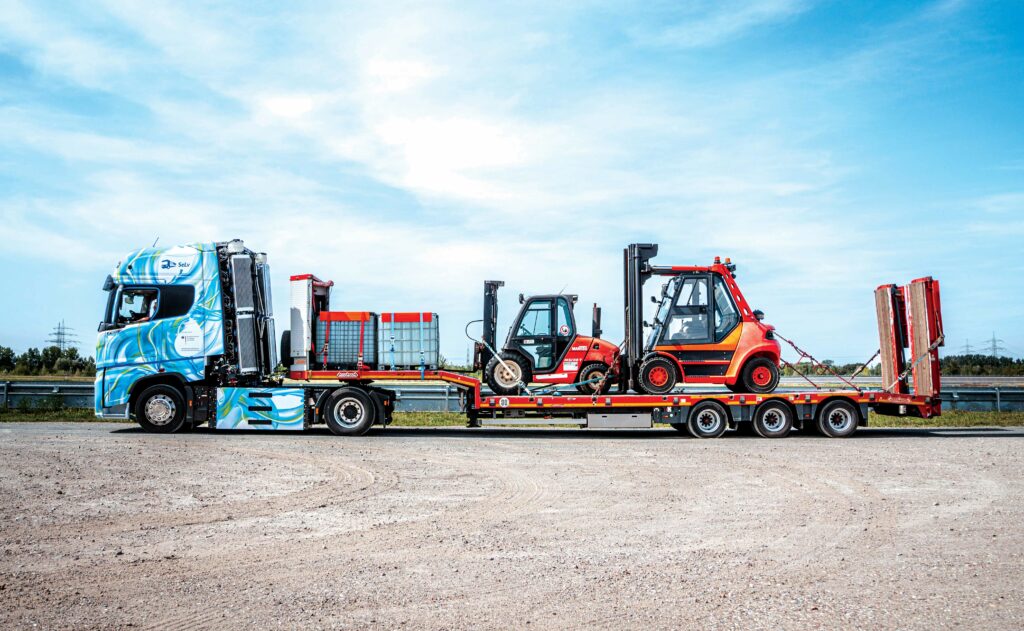
The fuel cells are cooled using a set of large radiators mounted to the rear corners of the truck cab. This is one of the most visually noticeable differences to a standard truck and Hadzovic says they are one of the biggest pain points of the vehicle. This is because the coolant sits at 75 C, compared with 105 C for a diesel engine, and he explains: “The reduced temperature difference to ambient significantly increases the surface area required for the radiators. We initially looked at putting them in the traditional location, at the front, but we quickly realised that this was not possible owing to the available integration space.
“Given that the maximum fuel cell power is mostly needed when you’re driving uphill at 40 or 50 km/h, there is not much wind in the front at those speeds, so it is actually debatable how beneficial it is to have it at the front. So, instead, we tried to find a logical alternative location and because we also have other components that are thermal-management relevant, placing them in the area we chose delivered the best electrical integration and energy consumption we could achieve.”
The vehicle has a number of other cooling loops, all running at different temperature levels. The battery requires the coolant to sit at roughly 20 C – a low temperature that requires active cooling – while there is also a medium temperature circuit for the electric motors, auxiliaries and inverters and a heating circuit for heating the cabin. Having initially separated all the different circuits in the initial prototype, the team went on to explore different ways of integrating them, ultimately coupling them to achieve a significant reduction in energy demand for thermal management.
“In the end, we have one big cooling circuit where we can just shift the temperatures,” explains Hadzovic. “If you need to heat up the cabin, for example, you can use the waste heat from the electric motors and inverters. Or, in winter, if you need to heat the battery, instead of doing it exclusively electrically you can also use waste heat from the drivetrain. We have three temperature levels when we decouple them, but we can also couple them all together and bring them all to one temperature level. So, we have really excellent flexibility.”
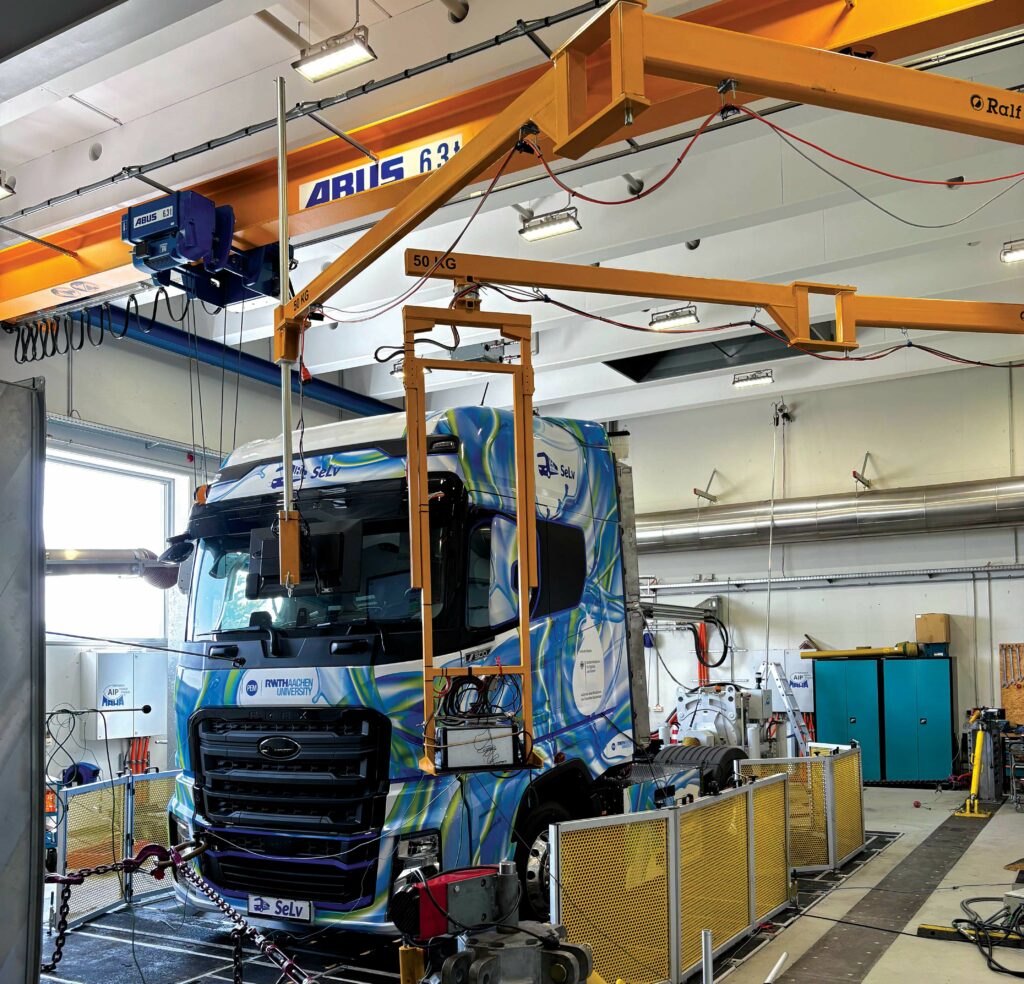
(Image: Tarik Hadzovic)
Software innovation
The SeLv range extender system is based, very simply, on the state of charge of the vehicle’s battery, with on-the-road charging carried out only between fixed lower and upper thresholds. However, this is a very basic approach and Bayerlein and Hadzovic are working on two aligned PhD projects – one focused on operating temperatures and the other on energy use – with the aim of developing and integrating a predictive energy management system to optimise the range extender operation at a far more complex level.
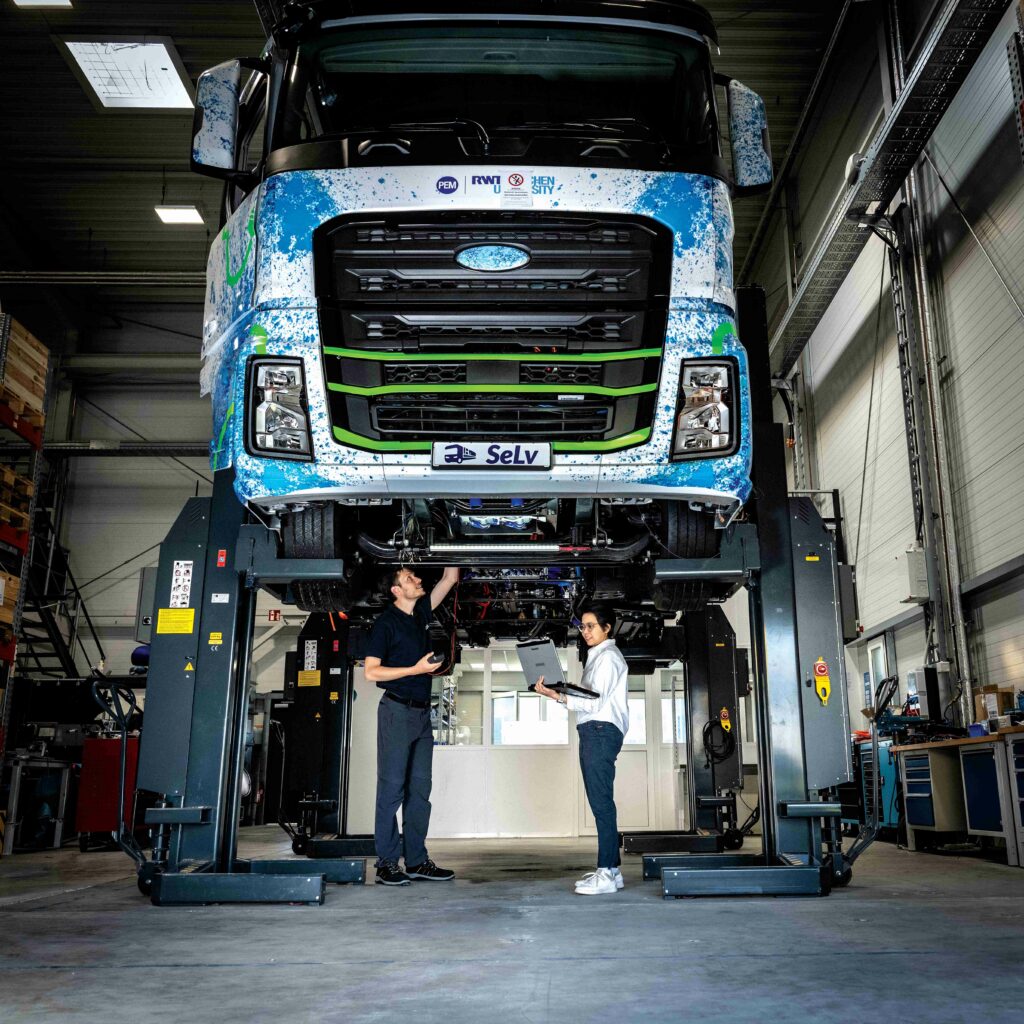
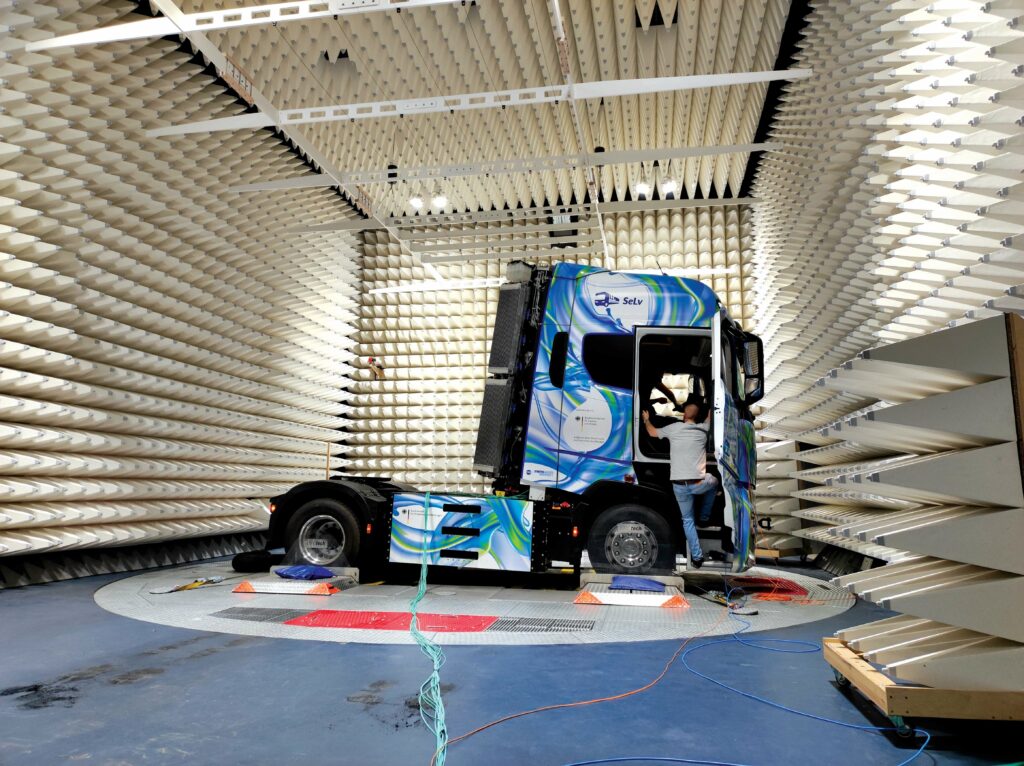
To support this, the team fitted a large number of different onboard sensors to the vehicle. These combine the basic sensor set-up required for internal management to enable the vehicle to function with additional systems that support in testing and development, helping the engineers understand how the system behaves and evaluate how their new predictive management simulations work in practice.
“The idea is that if we know the route that the truck is going to follow, we can use predictive energy management to determine the power demands throughout the journey and supply the power that is required from the fuel cell, with the rest buffered by the batteries” explains Bayerlein. “We can also check whether there is any issue with the boundaries of the system, with regard to every state of charge, and optimise the entire process.”
This energy management approach is not so relevant for road cars because most do not typically run on set routes. However, haulage logistics are meticulously planned, with standard routes that are entirely repeatable and predictable. Crucially, while this concept has been developed initially to work with the fuel cell range extender system, it can also work for all-electric vehicles, and while nothing has yet been integrated into the vehicle, the pair plan to soon apply their technical concepts in practical trials for further research.
“Thermal management is a major energy consumer in electrified fuel cell trucks, representing up to 13–14% of total vehicle energy under extreme hot or cold conditions,” says Hadzovic. “The SeLv is essentially still a battery electric vehicle – if you take the fuel cells out, you still have all the challenges that you also have with the pure battery electric – so we are trying to take a look ahead at the route and optimise the thermal management.
“There are different possibilities: offline optimisation, which is computed before the route to set optimal reference setpoints; or online optimisation, where every step takes place live onboard in the vehicle. That is what I am trying to do now, using a process called Model Predictive Control [MPC], using a model of the system to mathematically predict the future driving conditions such as route, ambient temperature and power demand. We can then use this to attempt to optimise the actuator controls and reduce energy consumption whilst still cooling the components to the correct level. The aim is to save energy by cooling as little as possible, whilst avoiding over-cooling or over-heating.”
Bayerlein continues: “The idea is to couple it with the work I am doing on power because if you know the power demand and how the vehicle is behaving, you can use that to optimise the thermal management. My PhD focuses on using MPC to predict future driving conditions and translate predictive thermal management concepts from simulation into practical, real-world vehicle control systems, with a central part of the work being put into developing and testing different controllers to see which are suitable for MPC.
“This requires a careful balance. The thermal models must be accurate enough to represent complex system dynamics, yet fast enough to run in real time on automotive control units. To achieve this, we are investigating data integration from sources like GPS, ambient conditions and vehicle power demand to enable predictive control that is both feasible and efficient. By bridging simulation-based MPC development and practical implementation, the research seeks to enable energy-efficient operation and provide insights applicable to both fuel cell and battery electric trucks.”
Existing fixed charging limits create very erratic power demands on the fuel cell over the duration of a drive. This results in peaks and troughs of power delivery as the fuel cell responds to the state of battery charge, with increasing onboard charging power required as the battery reserves are used up. In stark contrast, however, the predictive models result in a far smoother operation, with near constant power demands on the fuel cell and far less erratic use of the battery. That is the ultimate goal, which, if achieved, could potentially be the biggest legacy of the SeLv project overall.
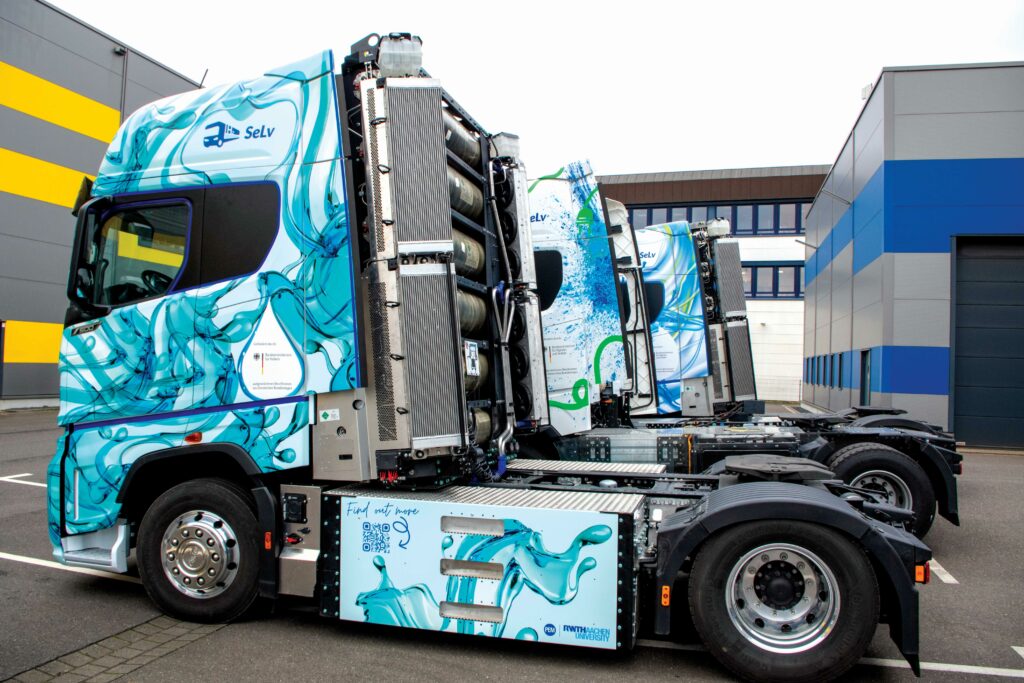
(Image: Erich Friedrich)
Development journey
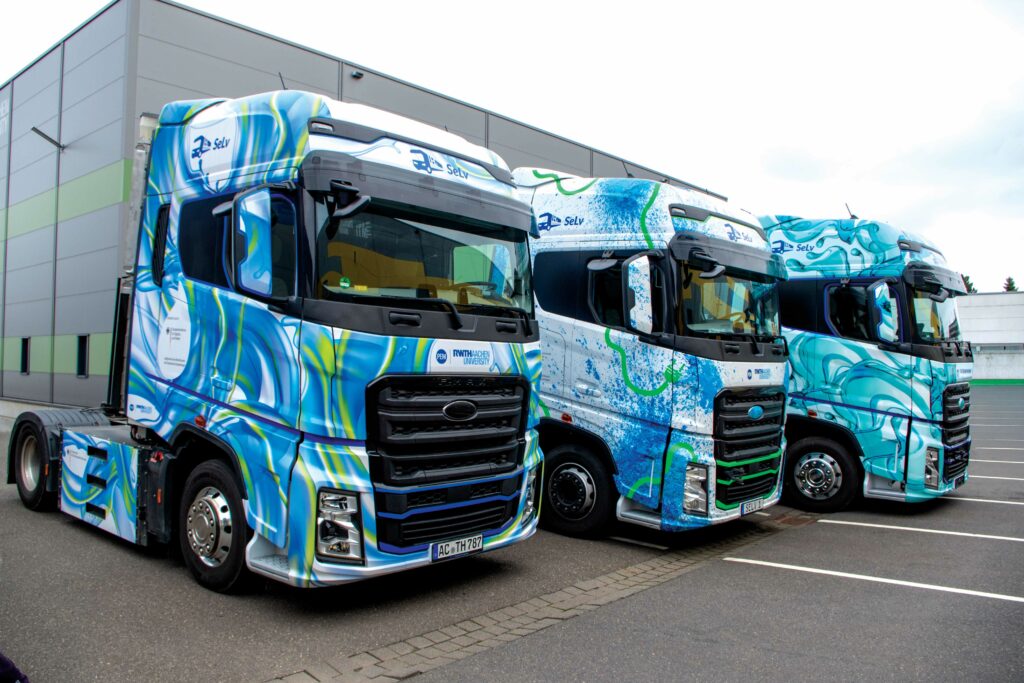
Over the course of the SeLv project, the team developed three different vehicles that were used to evaluate each development phase in the project. The first, SeLv 1, was put together around two years in and was a very basic prototype design, created using the most suitable parts available on the market at the time. “It was barely planned out in CAD at all,” recalls Hadzovic. “It was built very quickly because we just wanted to get all the systems together with the goal to head out on the test track and evaluate it as quickly as possible.
“We wanted to explore the concept, see what worked and uncover real-world challenges. We used whatever components we could get – for example, we had to use NMC batteries, simply because that’s what we could get our hands on. We used an e-axle design, but that only delivered 100 kW, which was enough to move the tractor but not the trailer, and the initial thermal management system had completely separate cooling circuits.”
The second machine, SeLv 2, was quite the opposite. Using knowledge gained from the initial testing programme, the team spent a significant amount of time adjusting the design, focusing on the packaging, developing the modular system and integrating everything neatly with cables and piping. Towards the end of the project, the creation of SeLv 3 then delivered minor improvements of the second prototype, maintaining the basic structure and the assembly groups and ironing out problems discovered in testing.
“Everything mostly came together as expected, but over the project we did change quite a lot of items in the vehicle and we also learned to be realistic about the software effort that is needed to get things together,” he continues. “SeLv 2 really looked more at the whole architecture. The fuel cells, for example, did not change, but the whole drivetrain concept changed between SeLv 1 and SeLv 2, as did the batteries and the thermal management system. It was a far more professional build, moving it much closer to a series-ready vehicle.
“We managed to obtain some LFP batteries, so we switched from the NMC ones to gain the benefits of better safety, longer cycle life and lower cost. We knew right from the start that these types of batteries are ideal for heavy-duty trucks and stationary storage applications, so it was an obvious change once we could do it. Then, on the drivetrain, the e-axle was replaced with the current central motors configuration to deliver full power to move the tractor and trailer. Again, this was possible thanks to better component availability, but it was also achieved through careful system design.
“The thermal management moved from fully separate cooling circuits on SeLv 1 to a highly integrated system in SeLv 2, which couples the three circuits – motors, inverters and auxiliaries – into one loop with a single expansion tank, enabling more flexible energy routing and heating and cooling options. We also did some work on the low electrical system for SeLv 2, adding more DC–DC capacity because the SeLv 1 low-voltage boardnet proved to be insufficient for the loads we observed during testing. SeLv 3 was then simply a refinement of SeLv 2, with the basic structure and assembly groups remaining the same and just a few small improvements implemented.
“Across the evolution from SeLv 1 to SeLv 3, the main lessons were the importance of good software to integrate all systems; the need for careful selection of components, based on availability and performance; and the importance of designing for integration and energy management, rather than simply making the vehicle operational. Each stage built on the previous one, moving from a rapid testbed to a near-series-ready system with optimised drivetrain, battery and thermal management architecture.”
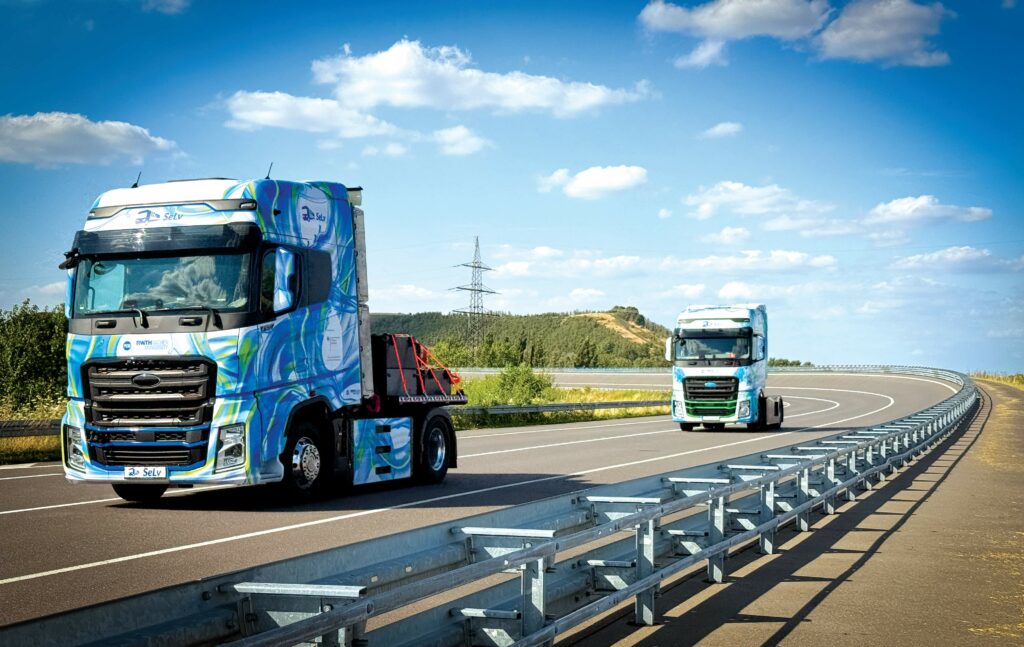
(Image: Patrizia Cacciotti)
Future evolution
The original plan for the SeLv project was to create a spin-off company that would fit the unique hydrogen range-extender concept to existing OEM vehicles. However, for a variety of reasons – including the COVID-19 pandemic, global economic instability and changes in both technology and regulation – the anticipated rapid uptake of clean energy solutions in the long-distance trucking market was never realised.
Many of the main truck manufacturers have now caught up and are slowly exploring their own concepts for emissions-free technologies, mostly through electrification. So, instead, the team has created a spin-off that is focused on providing engineering consultancy. Using the unique expert knowledge gained through the project, the team is able to support developments in the hydrogen and electrification space.
“In most cases, retrofitting is not the best solution from an economic perspective,” Hadzovic explains. “We have seen that ourselves – with the cost that we have for the whole system, it was not that interesting to take on an old vehicle and invest more money to retrofit it. It makes more sense just to develop a new one. What might be interesting in the near future when it comes to retrofitting though, is the development of hydrogen combustion engines, for cars and also for off-highway solutions that are produced in very small numbers – quantities of one or two – where it would be more expensive to engineer an electric powertrain than to just change the combustion powertrain.
“By keeping the cheap combustion engine and having hydrogen tanks, we might see the use of hydrogen grow to a point where the demand increases for it in mobility in general – and that could create a bridge solution towards ultimately bringing fuel cell electric trucks into the market, where they belong. In the end, I think we will see far more fuel cell electric trucks compared to the hydrogen combustion engines – but I also think that most of the vehicles will still be battery electric trucks.
“I also think we might see an approach for trucks like BMW does for passenger cars, where you integrate different propulsion systems into the same platform to create, for example, a small battery electric truck, medium battery electric truck and a fuel cell electric truck – but right now there are not so many OEMs that count on hydrogen when it comes to exploring emissions reductions because most have drifted more to battery trucks.”
Although the SeLv concept does not yet have a route to market, it has achieved some significant technological breakthroughs – and Hadzovic believes that the drivetrain itself is one area with significant potential. “The concept, with the three different speeds, really is optimal from an energy perspective,” he explains. “That is something we developed between ourselves and our partners alongside the main control unit, which was also developed especially for this vehicle, and it can be easily integrated into more or less any heavy-duty truck.”
The development of the SeLv platform is far from over, and the team is now exploring the potential use of liquid hydrogen to power the range extender concept – as this has the potential to provide a more efficient form of energy storage, which would result in longer range. The original vehicle, SeLv 1, is in the process of being stripped of its tank bridge and fitted with a new liquid hydrogen tank to support testing of the concept.
“The main motivation for investigating liquid hydrogen is its higher energy density compared with gaseous hydrogen,” explains Bayerlein. “That could bring significant benefits because it would allow the trucks to carry more energy without increasing the tank size. But it comes with significant technical challenges because the liquid hydrogen is stored at minus 253 C and must be carefully managed to bring it to ambient conditions before it can be fed into the fuel cell. Our goal is to explore these challenges in a real vehicle environment, understand how the technology behaves and identify what solutions would be required to make it practical for future hydrogen-powered trucks.”
Right now, whether the hydrogen is in liquid or pressurised gas form, it seems that the range-extender concept is still a little ahead of its time. Global markets for zero emissions long-distance trucking are not yet mature enough; capabilities for handling and distribution of hydrogen are still not yet fully developed and certified; and the availability of hydrogen fuel on mainstream trucking routes is too far off what it needs to be. However, the results from the testing cannot be ignored – and both Bayerlein and Hadzovic are confident that, given time, the concept will eventually see its day.
(Image: Clemens Niederée)
“There is a lot of chicken–and–egg discussion where companies would maybe like to invest in something like this, but they are not sure about the market and how it’s going to develop,” says Hadzovic. “There’s a lot of know-how that we built through the project that is now available but we need the market to start investing. I think we’re going to see trucks being electrified first, but if they are going cross-country, there are still so many question marks with regard to the pure electrification concept.”
So, is this still the best option for long-range trucks? “Yes,” says Bayerlein confidently. “The issue is that it’s not as easy as it looks at first sight. There’s so much more behind it than just bringing a vehicle to the market, and it really is a cost, process and infrastructure challenge. What we can see, in my opinion, is that battery electric vehicles will soon get to the point where they are cheaper in their total cost of ownership compared with diesel trucks, but then this will go on until we reach a tipping point where battery electric trucks can’t really deliver the range for all requirements.
“At that point, there will be a part of the market that battery electric trucks simply cannot address very easily. Crucially, this is not just on the highway, but also off-highway, and those two areas are where we see a big opportunity for hydrogen because it has a high energy density and it is faster to refuel. It’s more expensive, but it avoids the cost and inconvenience of adapting operational processes – which are inevitable if you go for battery electric – so I do think that we will come to a point where this concept will come to reality.”
(Image: Patrizia Cacciotti)
Aachen innovation
The Aachen team began with StreetScooter, a vehicle based on the idea of maximising ‘last-mile’ opportunity, optimising for regeneration on a route that involves stopping, starting and accelerating 300+ times a day. The company was founded in June 2010 and the rapid implementation approach saw the first delivery vehicle on the road for testing in 2012.
The StreetScooter was designed with a permanent magnet synchronous electric motor providing around 50 kW of peak power and 205 Nm of torque. The standard ‘Work’ version was fitted with a 20.4 kWh lithium-ion Bosch battery pack delivering around 80 miles of range with the larger ‘Work L’ latterly gaining a 40 kWh unit and a range of up to 116 miles.
The company was bought by Deutsche Post DHL in 2014 and by the end of 2018, there were 8000 vehicles in operation. An even larger ‘Work XL’ version was then developed with Ford, combining a Transit chassis with a range of electric motors and lithium-ion batteries up to 76 kWh, delivering up to 90 kW of power, 276 Nm of torque and up to 200 km of range.
The body was innovative too, with a steel frame and coloured-through outer plastic panels to reduce damage and limit visibility of scratches, and a modular design to enable parts to be replaced quickly and inexpensively. The company was recently re-bought by original inventor Günther Schuh’s company e.Volution, with plans to move production to Thailand.
The Aachen team was also responsible for the e.GO Life, a four-seater microcar with an aluminium spaceframe, plastic panels and Bosch-based electric drivetrain. It went into production in 2019 with a motor capable of delivering 53 kW maximum power (25 kW continuous) and a 21.5 kWh battery giving a range of up to 89 km.
The first edition was followed by the e.GO Life 20, 40+ and 60. These delivered maximum power figures from 20 to 57 kW, battery capacities from 14.5 to 21.5 kWh and range limits from 104 to 206 km. Around 1400 cars were sold and a new model, the e.wave X, was in the works when financial challenges forced the company to close in 2024.
(Image: Michael Betz)
Specifications
SeLv 2 and 3 prototypes
Weight: 40 tonnes
Peak power: 468 kW (628 bhp)
Continuous power: 375 kW (503 bhp)
Transmission: 3-speed for maximum climbing and optimised highway efficiency
Battery capacity: 368 kWh usable
Charging capacity: 250 kW
Cell chemistry:
Lithium-iron phosphate (LFP)
Battery power: 489 kW
Fuel cell output: 170 kW
Hydrogen tank capacity: 35 kg (at 350 bar); 70 kg (at 700 bar)
Range: 750 km (350 bar) to more than 1000 km (700 bar)
ONLINE PARTNERS