















Flyback converter for e-bike chargers
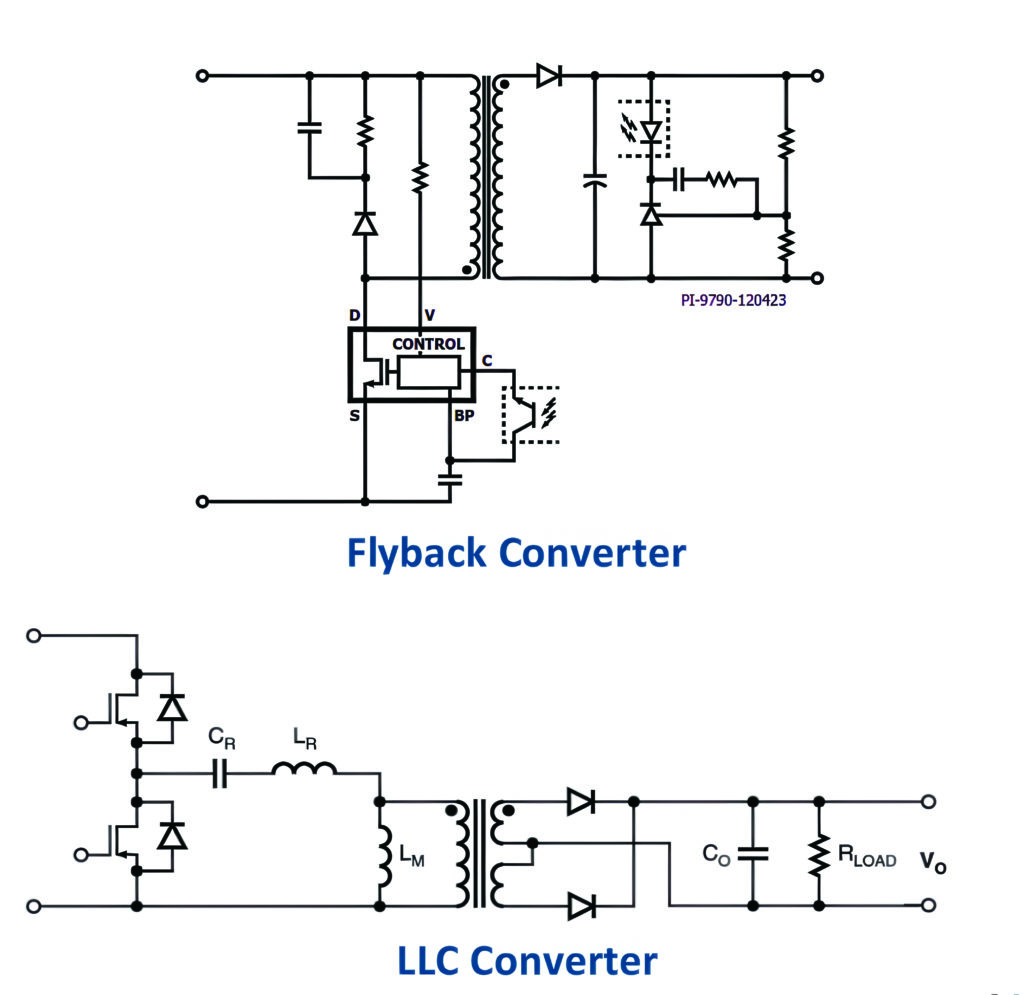
(Image: Power Integrations)
Power Integrations (PI) has updated a key power converter for higher-power e-bike chargers with a new control algorithm and more power-efficient gallium nitride (GaN), writes Nick Flaherty.
TOPSwitch is a simple single flyback converter that is used around the globe. The latest version with GaN extends the flyback converter from 250 up to 450 W for the higher-power battery chargers in e-bikes.
“The aim is to provide a power converter with good efficiency that is very cost effective,” said Andy Smith, director of technical outreach at PI. “We use a new control algorithm and control the off time of the switch, and that gives a flat efficiency across load, only dropping 10% at low load as a result of the new algorithm,” he said.
The current TOPSwitch device converts offline AC (60–308 V) to a 1.8–150 V constant voltage output using a 725 V MOSFET in a single-ended flyback configuration. Output power reaches up to 250 W before I²R losses become excessive. “Above that you use half bridges or resonant converters. What we have done with TOPSwitchGaN [TSG] is replace the MOSFET with a GaN transistor, which means we can push flyback designs to 450 W in 230 V applications. This allows us to go into areas that are traditionally off-limits for flyback converters.”
The TSG utilises the same controller and circuit configuration as TOPSwitch and TinySwitch, allowing for a design scalable from 20 to 450 W without modifications. While prior chargers implemented a resonant LLC converter, the flyback architecture enabled by the GaN-based TSG offers improved cost efficiency.
“We expect this to be a very high volume, in the hundreds of millions of devices,” said Smith. PI has its own reactors and epi process built on sapphire wafers to ensure volume supply. “Sapphire gives us almost unlimited supply as this is used for the LED market,” said Smith. “We have fab partners in various parts of the world, US, China and other parts of Asia with the aim of geographical diversity.
“What we are doing is using GaN to take flyback converters into a new area. It’s not about the new material, it means designers can use a single-ended flyback not a dual-ended or resonant architecture.”
The device runs up to around 150 kHz to keep electromagnetic interference compliant with global standards.
ONLINE PARTNERS