








Classic car EV conversions
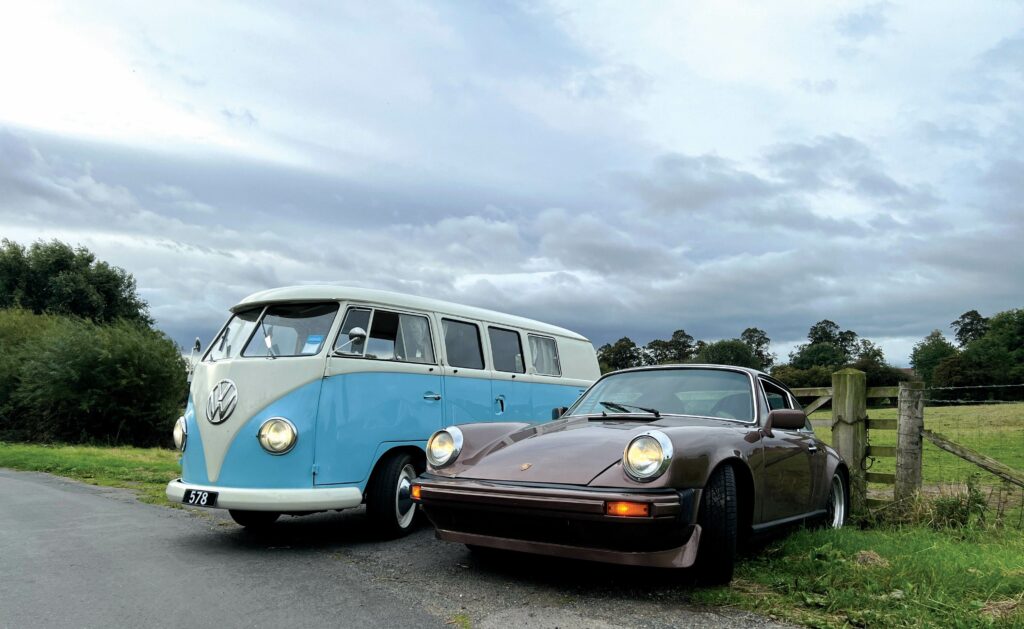
(Image: eDub Conversions)
Electric soul
There is more than one way to approach EV conversion of a classic car, as Peter Donaldson discovers
Marrying classic automotive design with modern electric powertrain technology, the EV conversion sector has evolved from a niche curiosity to a growing engineering discipline. We quizzed five companies on the subject: eDub Conversions, Electric Classic Cars, Everrati, Fuel2Electric and Retroelectric, each with its own distinct approach and methodology, but also with much in common.
(Image: Electric Classic Cars)
Pragmatic preservationist
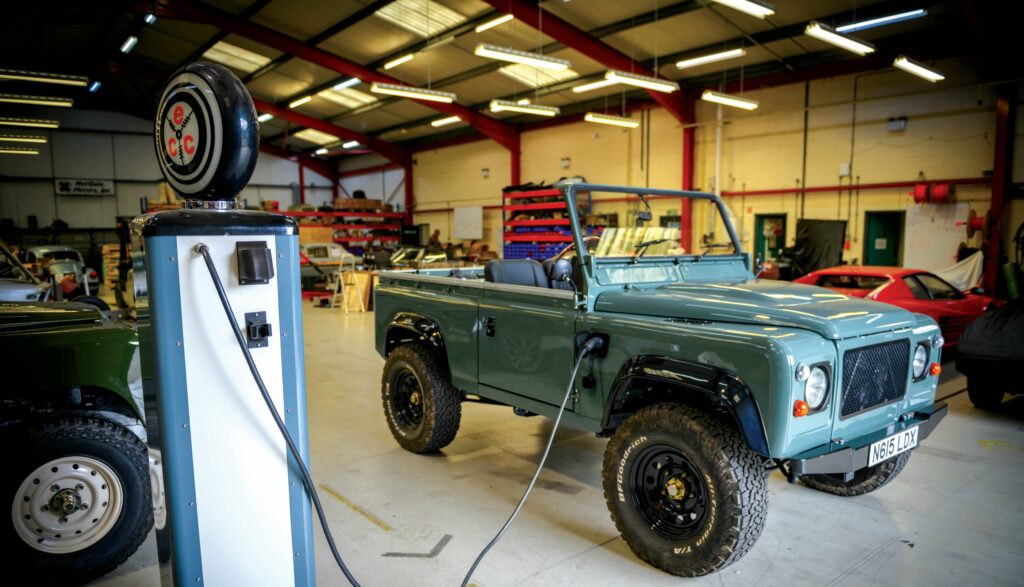
In business for more than a decade, eDub Conversions is committed to sympathetic conversions in which the EV powertrain is adapted to fit the original vehicle’s architecture, dynamics and spirit. According to the founder and director of eDub Conversions, Kit Lacey: “We prioritise conversions that retain as much of the original vehicle as possible.” This approach is driven by a dual imperative: preserving vehicle value and simplifying regulatory approval with UK authorities, particularly the Driver and Vehicle Licensing Agency.
Lacey frames the ground-up alternative – in which the classic shell is mated with a new, purpose-built EV platform – as an exercise in added cost and complexity. “When building a vehicle from scratch, a significant amount of design and engineering time must be invested into creating an entirely new platform. Even where chassis are designed to accept multiple body styles, you are still constrained by predefined mounting points and geometry. Designing a truly bespoke platform can add hundreds of engineering hours.”
He notes that while clean-sheet designs bring the advantage of full integration in that wiring, packaging and system layout can be optimised from the outset, they are better suited to ‘boxier vehicles’ such as Land Rovers than to streamlined intricate machines such as Porsches and classic saloons.
At eDub, battery integration starts with the space vacated by the ICE powertrain, with the engine bay typically repurposed to house a battery enclosure. Wherever possible, the company also replaces the original gearbox with a combined motor–gearbox unit. Lacey notes that such units are generally about the same size as a traditional gearbox and, with both engine and fuel tank removed, space is freed-up for extra battery capacity.
All systems are custom-designed and built in-house, with battery modules structurally integrated within purpose-designed enclosures. Batteries are never installed in the cabin. Electrical and thermal safety are managed via the BMS, using dual independent coolant loops for drivetrain and batteries.
Notably, eDub rejects complex third-party or OEM Vehicle Control Units (VCUs). “Our experience has shown these systems to be overly complicated, vulnerable to supply chain disruption and often difficult to integrate fully,” Lacey explains. Instead, the company employs an intentionally simple in-house design where the BMS is the primary intelligence, supplemented by a hardware-based ‘eDub Control Board’ of relays and fuses for safety.
The company avoids chassis re-engineering to prevent regulatory complications, opting instead for suspension adjustments to manage added mass. Dynamic simulation software is not used because steering and chassis geometry remain largely untouched.
Data logging is handled by the BMS for service diagnostics, but telemetry is typically not shared with owners to “avoid unnecessary concern.”
In response to past supply chain volatility, eDub brought more systems in-house. Reversibility is “fundamental” to their design, both as an engineering constraint and as a philosophical stance, ensuring that their bolt-in systems can be removed in a day.
(Image: Everrati)
From bolt-in to bespoke
The heritage of Electric Classic Cars (ECC) is in “zero-touch, reversible” bolt-in conversions where no new holes are drilled. However, since 2024, it has expanded to offer new classic recreations based on ECC’s in-house EV skateboard chassis.
Owner and founder Richard Morgan is candid about the compromises involved in converting a 40-year-old car. “You are limited by available space and weight, and constrained by the performance of the chassis, suspension and brakes as to how much power you can realistically and safely install in the vehicle,” he says. The new platform eliminates these constraints, allowing an optimal, central battery placement, modern multi-link suspension and improved efficiency.
All battery packs are designed and built in-house. A key technique is using “batteries as ballast” with separate front and rear packs to achieve a target 48/52 weight distribution.
ECC’s thermal management system, refined over a decade and 100+ vehicles, uses heat pumps for their efficiency benefits and has been proven in temperature extremes as part of the testing regime through which all the company’s vehicles are put. “One of our electric Land Rover conversions was driven from the Arctic Circle to the heat of Spain in one journey – a total of 3000 km – without issue.”
ECC has developed its own robust, in-house VCU and software stack over 10 years, enabling capabilities such as selectable driving modes and customisable regenerative braking, for example, tuned for each model with factors such as drivetrain layout and weight distribution taken into account. As Morgan explains, a rear-engined, rear-wheel-drive vehicle such as a VW Beetle would have less regen than a similar front-wheel-drive car because it is safer to do most of the braking on the front axle.
ECC aims for weight parity, limiting added mass to that of one adult passenger. Sometimes, because of improved weight distribution, a suspension spring rate and damper change is required to compensate, he notes. Such changes are validated by a test driver in real-world conditions, not in simulation.
The VCU features full data logging and diagnostics, with access for technicians on a limited basis, and the company offers a customer app for remote connectivity.
ECC mostly uses new components and has built a robust supplier network to mitigate volatility. The exception to the new components rule is Tesla drivetrains that the company reconditions with new bearings, seals and gear sets. In some instances, they also modify these drivetrains to eliminate design flaws, for example performing a ‘coolant delete’ on the leak-prone Tesla large drive unit. Other systems and critical components such as the BMS, VCU and battery modules etc are new.
Reversibility is core to their “zero-touch” ethos, driven by respect for the vehicle and alignment with UK registration rules.
(Image: Fuel2Electric)
Sympathetic systems integrator
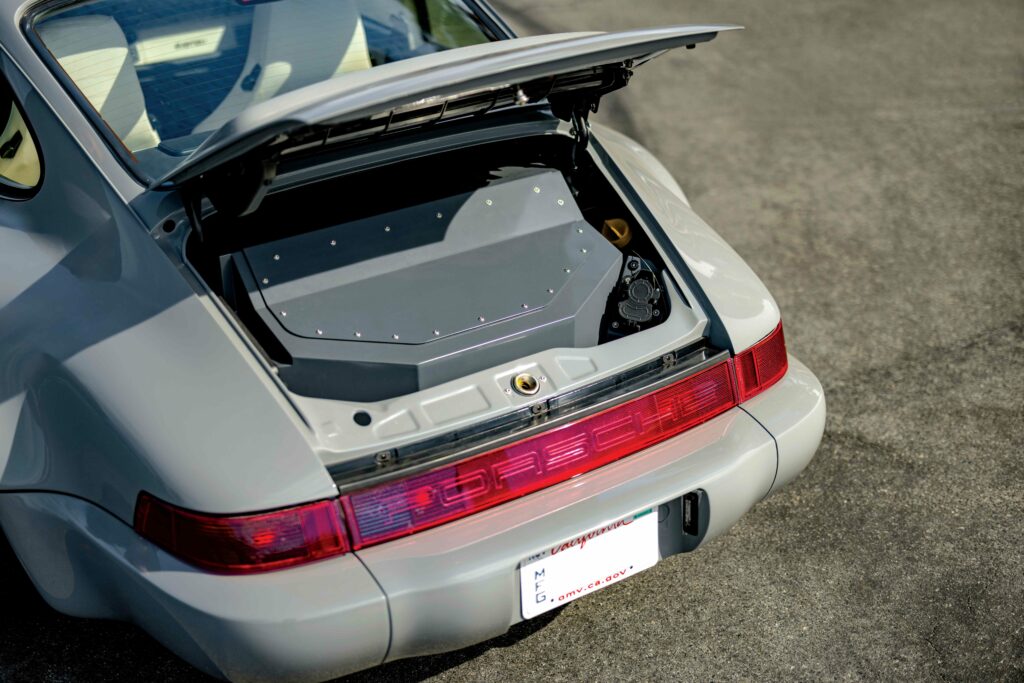
Everrati is another major practitioner of sympathetic electrification, but with a foot in a more radical camp. Their primary method integrates a fully engineered EV powertrain into the original body/chassis, which has been stripped to bare metal and refreshed but is structurally unmodified – an approach that preserves the vehicle’s character and provenance. Alongside this, their ‘Powered by Everrati’ division offers purpose-built electrified platforms for projects where volume or regulation justifies a ground-up approach.
“A sympathetic electrification demands careful optimisation to integrate an EV powertrain without compromising the original vehicle’s structural integrity or dynamic balance,” says Tony Fong, Everrati’s head of engineering. “Our process starts with detailed 3D scanning, full vehicle mass measurement, and corner-weight analysis to define the available packaging envelope and establish strict weight targets.”
He identifies packaging freedom as the principal trade-off. A sympathetic electrification constrains battery placement to original ICE component volumes, often necessitating modular packs rather than a skateboard, impacting cost and reducing the extent to which weight distribution and the centre of gravity can be optimised. Furthermore, total vehicle mass is limited to the originally validated and homologated weight envelope. A clean-sheet platform removes these constraints but requires massive investment in chassis design, validation and homologation.
Everrati’s battery design process begins with a clear definition of the intended use case, performance targets and representative drive cycles, which collectively determine the energy, power, thermal and durability requirements of the system. “From this baseline, we select the most appropriate cell chemistry, module format and electrical architecture, taking into account vehicle-specific drivetrain characteristics and the physical constraints,” Fong explains. All systems are engineered in line with the relevant UN ECE safety standards.
“Where appropriate, off-the-shelf battery modules offer strong cost, validation and production advantages. However, for higher volumes or more constrained vehicles, custom battery solutions allow us to optimise packaging, weight distribution and thermal performance.”
Battery placement is engineered via CAD studies to preserve space and lines, while performance drive-cycle simulation is then used to size the thermal management system.
Thermal architecture typically features independent coolant loops for the battery and drivetrain power electronics, with integrated cooling for charging systems. “We also develop and integrate modern cabin heating and air-conditioning systems, often significantly improving comfort over the original factory specification.”
Everrati deploys a proprietary, model-based VCU and software stack enabling enhanced safety, integration flexibility and feature development while maintaining OEM-grade robustness, Fong notes.
Regenerative braking is integrated with additional sensors, allowing the VCU to manage torque delivery and regen precisely. Regen characteristics and drive modes are calibrated for each vehicle type, with bespoke calibration available to customers who want to fine-tune acceleration response and regen behaviour.
Everrati aims to match the pre-electrification mass. So, suspension and brakes are uprated primarily for increased torque, with simulation employed to ensure mounting structures can withstand 20G crash loads. The company forgoes extensive dynamics simulation, focusing instead on physical validation. A cloud-enabled data logging system monitors vehicle health proactively.
Component sourcing varies by programme; high-performance models use more custom solutions, while power electronics come from Tier 1 suppliers, and salvaged parts are avoided. Use of modular, standardised architectures helps combat supply volatility. All components are fully bolt-in and reversible.
Subjectively, Fong regards the holistic integration of touch-and-feel elements as Everrati’s most elegant solution, extending from gauges and shifter feel to braking system refinement, “where modern performance is delivered to enhance the emotional connection to the vehicle.”
(Image: Retroelectrics)
Full spectrum curator
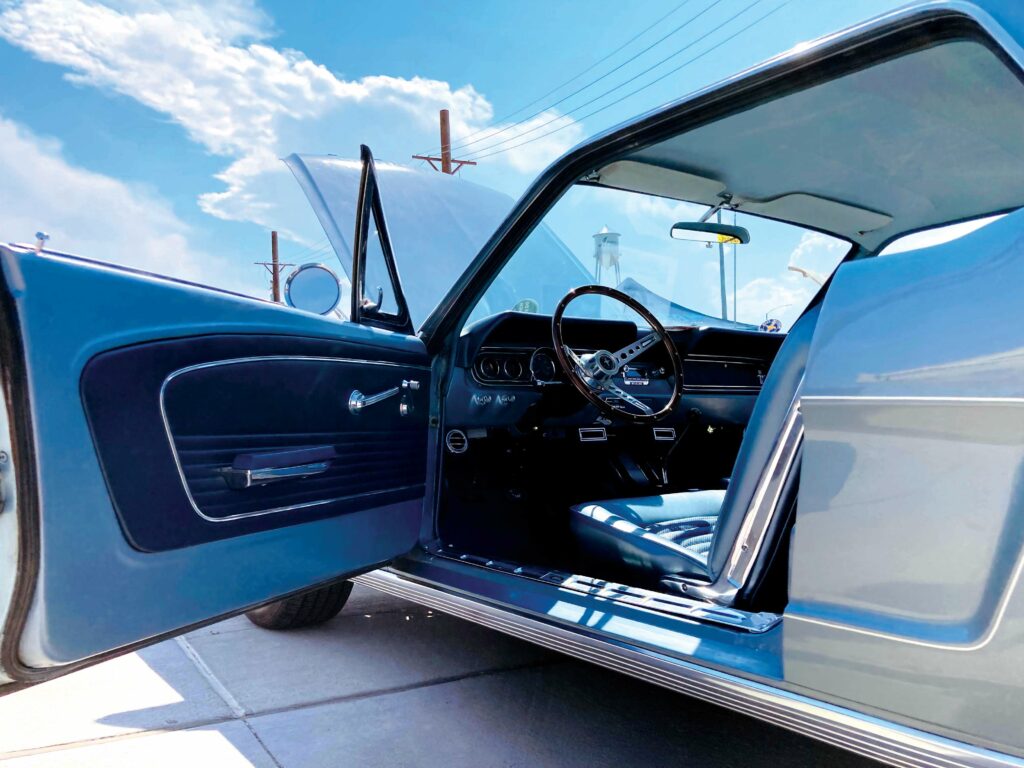
Fuel2Electric helps clients across North America from DIY builders to fleet managers design their EV conversions, drawing on a network of more than 120 experts including kit developers and installers. Everything from non-destructive, model-specific bolt-in kits to fully custom, performance-oriented builds is within its scope. The kits cover an eclectic bunch of vehicles including Ford’s F350/450, E350/450 and Model A, the Land Rover Defender, Porsche’s 911 family and the mid-engined 912.
“Some clients are deeply committed to preserving legacy – they don’t want to drill, weld or alter the soul of the vehicle. Others prioritise comfort, safety, drivability or outright performance. Both approaches are valid,” says co-founder Laurent Frugier.
Bolt-in kits are more expensive upfront but offer “unmatched balance, repeatability and peace of mind,” Frugier says. “They are non-destructive, reversible back to ICE and fully integrated: all components arrive together, harnesses are pre-sized, connectors are rated correctly and software is preconfigured. Installation typically takes days rather than months.”
Universal or semi-custom builds offer maximum flexibility but require far more design decisions affecting motor voltage, battery architecture, cooling strategy and weight distribution.
Fuel2Electric strongly favours used Tesla battery modules for most conversions, arguing that they offer the best balance of performance, energy density, documentation, availability and cost. However, all the modules must come from the same pack, with matched voltage and charge-discharge history. The company offers modular battery boxes to ease integration.
Builders wanting new batteries typically face a choice between brand-new modules (which require full custom packaging, wiring and cooling) and sealed, off-the-shelf packs.
“We highly recommend 3D scanning before finalising battery architecture. Weight distribution is critical, and placing mass where the ICE sat is usually the best starting point,” Frugier notes. “We typically recommend single or dual-pack layouts for packaging simplicity and BMS configuration, when possible.”
Fuel2Electric recommends its 120–144 V systems with its small battery pack for vehicles under 3000 lb and 400 V systems for heavier ones. “Following this guideline, most conversions stay within ±200 lb of factory weight,” Frugier notes.
Rather than using VCUs from OEMs, Fuel2Electric selects aftermarket units to match the motor and system architecture.
When it comes to engineering the vehicle’s dynamics, Frugier emphasises that weight distribution and dynamic management are key. “Even when total weight is similar, we almost always recommend suspension and brake upgrades, even on relatively light builds.”
For higher-performance applications, or where weight and power increase substantially, subframe swaps can offer the best mechanical harmony between motor output, suspension geometry and braking capacity.
For fleets, he adds, durability, repeatability and serviceability take precedence over outright performance. Here, “factory-like” behaviour and predictable handling are the primary goals and data access is key. Developed by a partner, the kits Fuel2Electric offers for Ford fleets include near real-time telematics, with data access available via subscription.
For most projects, the company values “real-world experience and proven architectures” over complex simulation.
Excluding Tesla modules, about 85% of components are from Tier 1 suppliers. Tariffs have influenced costs more than availability, reinforcing their Tesla advocacy. Their view on reversibility is nuanced: it’s the “gold standard” for collectibles but often less relevant for cars where electrification is its only viable future.
The purist’s approach
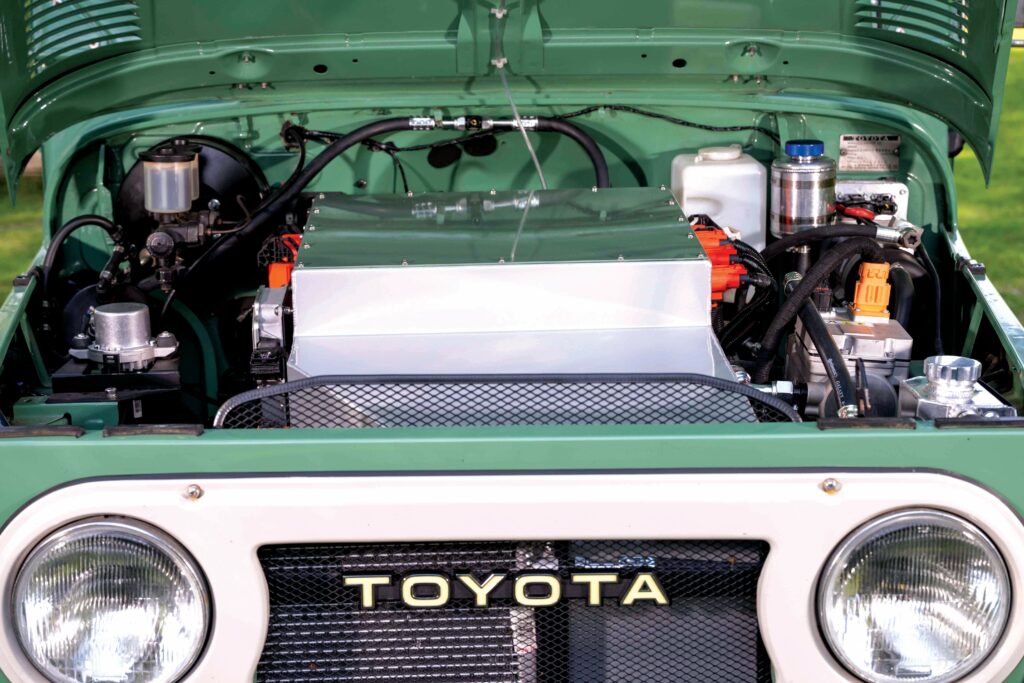
Retroelectric’s philosophy is pure preservation, focusing solely on converting existing classics and not on building new platforms. “We always start with how can we keep the car looking stock and as original as possible,” says commercial director Tim Hustwayte. “From there, we factor in the total weight, weight distribution, motor performance and handling requirements to spec the best EV parts.”
For battery design, placement and structural integration, the company selects “best of breed” off-the-shelf modules in various form factors and configurations to create the optimal solution. Often, coolant plates are used as structural parts of the pack. Packs are designed around existing spaces, normally the engine bay and fuel tank void, but not the cabin.
In thermal management design, Retroelectric’s usual practice is to provide individual loops, each with its own fluid reservoir, fan and heat exchanger. Heating is provided by positive temperature coefficient elements and a compact blower. The company either maximises reuse of the original air-conditioning equipment or creates bespoke installations.
For the VCU, it has collaborated with specialist suppliers to develop a common unit adapted across many vehicles.
Most of Retroelectric’s customers want their instrument panels looking analogue and original. The solution is a board that connects to voltage-driven gauges, with the speedometer drive unmodified. Additionally, stepper motors can be fitted to gauges so that they can be driven via CAN bus from the VCU and the BMS. “Digital gauges can be useful though and where fitted, we will do so sympathetically and style them to look appropriate for the vehicle.”
Typically, its conversions achieve weight parity, and although reductions have been demonstrated, battery capacity represents the major factor. “We spent a lot of time on our Porsche project,” Hustwayte says. “The recent 1972 Porsche 911 conversion had the same weight distribution as before but a 50 kg overall weight reduction.”
Regen is fully customisable but tuned to avoid an overly harsh feel. Onboard data loggers are included as standard, allowing remote diagnostics if an issue is flagged.
Conversions are designed to be reversible, bolting to original mounting points without cutting the chassis. They see this as both a regulatory constraint and a feature that preserves ‘matching-numbers’ authenticity.
The classic EV conversion sector is not converging on a single methodology. Instead, it is maturing into a diverse field where different engineering philosophies coexist, each valid for different project goals, vehicle types and owner values.
Click here to read the latest issue of E-Mobility Engineering.
ONLINE PARTNERS