




Chris Hazell rewires electrification with second-life EVs and clean tech
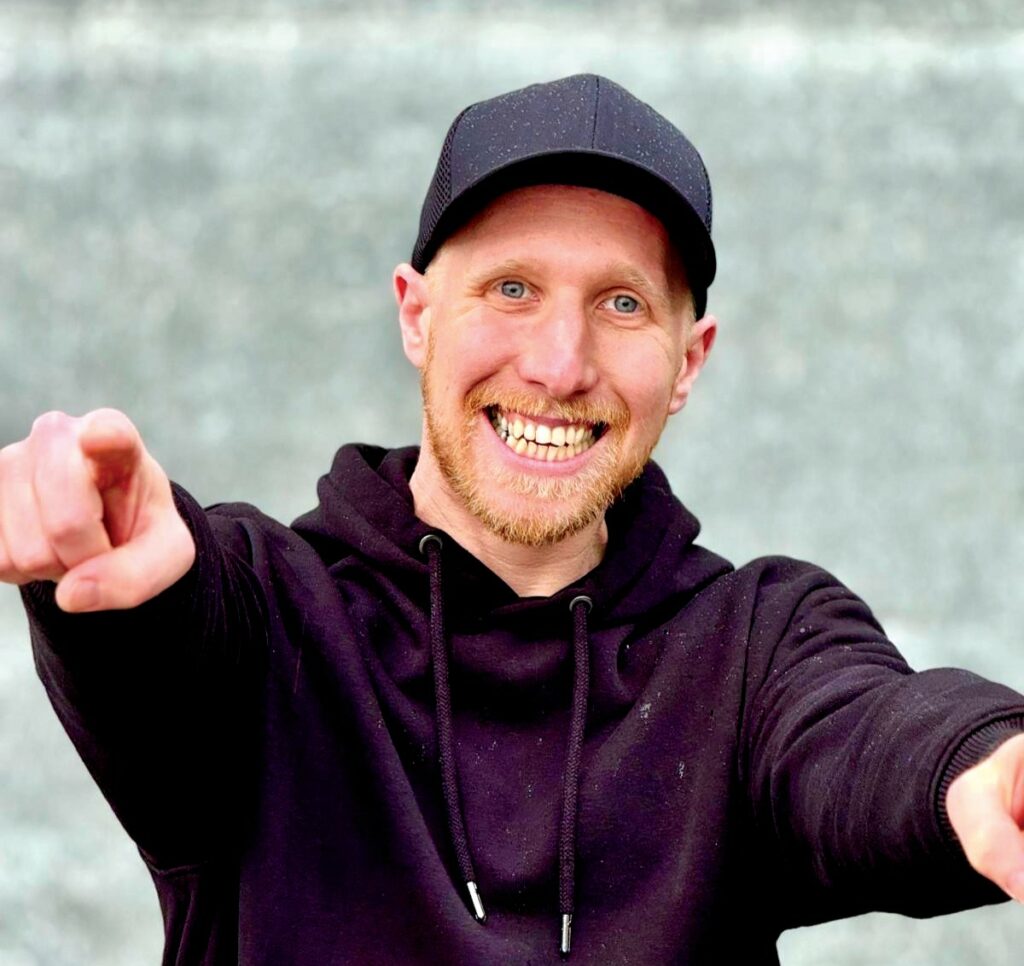
(All images: Chris Hazell)
Man on a mission
Chris Hazell has built his reputation and his YouTube popularity on crazy EVs – from a Batmobile to a 1200 bhp van – and you won’t believe where he’s going next. Will Gray reports
Engineer. Inventor. Innovator. YouTuber. There are many ways to describe Chris Hazell, but there is one particular term that he likes best. “I’m a disruptor,” he says. That is exactly what drew him into the EV world – the opportunity to step out of the comfort zone, cut, shut, and create – and it’s exactly what is driving him forward to his next adventure.
Online fans will know him from his YouTube channel, Hazell Nutz, where he takes viewers through some weird and wild EV projects – including creating a 1200 bhp VW race van, fixing a van from failed billion-dollar firm Arrival and, most recently, developing electric go-karts for DeWalt & Ebay so that Lando Norris and McLaren boss Zak Brown could race head-to-head.
Behind all this entertainment, however, is a serious – well, relatively serious! – engineer; a curiosity-filled tinkerer responsible for some ground-breaking creations in electrification, including the innovative Charge Qube (EME Issue 30, March/April 2025), and the successful EV conversion and battery pack firm, Fellten, which he recently exited.
Hazell was born into an engineering family but his severe dyslexia held him back at school. Despite learning coping mechanisms through specialist education, a general lack of support and the stigma attached to the condition at the time left him unconfident and, against his family’s recommendations, he took a route into art and design.
“I was good at science and I was always taking stuff apart. So, the engineering was there, but I had the creativity as well and I just needed to do something,” he explains. He suggests now that the course was “a waste of time” but in many ways it actually gave him the grounding he needed for the eclectic career he has since had.
It taught him video editing and software skills for online production; it taught him resilience and ingenuity for business; and, most importantly, it taught him to think outside the box. “I approach things very differently to a normal engineer,” he adds. “Rather than being hard trained, I’m more asking the question: ‘Well, why can’t you do it that way?’”
His post-course career took him into stage electronics and then events, where he prepared and repaired robotic moving lights and audio equipment. At the age of just 21, he ended up leading a group of engineers running 650 diesel generators that, somewhat incredibly, were used to power the entire London Olympic site.
After a few more years travelling around the UK working on festivals and building temporary ice rinks – during which time he got his first experience of electrical systems through fitting a solar-powered toilet block at Glastonbury – he started a business called Ramp it Up, renting out ramps for people to work on their own cars.
He helped people work on lots of different machinery, learned a lot, but never had the success he anticipated and closed it down after two years. “It was a great idea, but everyone who fixes their car themselves has no money,” he reflects. “It cost me some money, but actually I learned all the base skills I needed to build a business.”
EV revolution
Driven by his passion for power and performance, Hazell’s next venture, Down and Out, was on big-engine customer car mods. He did a Porsche 930 Turbo and a wide-body Liberty Walk Audi R8. Then, a request from “a guy from the online forums, with a camper van and a bunch of Tesla parts” changed his life forever.
“The split-screen camper van is what got me into electric,” he explains. “It was 2017 and there was hardly anyone doing EV conversions. He had a Tesla small drive unit and battery pack and I got to learn whilst being paid! At the same time, I bought a two-door R32 Skyline GTST with no engine for £1800 and decided to build my own electric car at the same time.
“I got a Tesla large drive unit, an old Chevy Volt 16 kWh battery pack and had to work out how to do it. I wasn’t sure if EV’s were the future at that point, but I was taking the R8 to shows and telling people I was going to build an electric Skyline and they were calling me an idiot. I saw the amount of disruption it would cause and I thought it was brilliant!”
Hazell picked up skills from other pioneers of EV conversion at the time, including the now late Jack Rickard, through his shows on EVTV; Sandy Munro, who stripped down new EVs that came to market; and Damien McGuire, who posted on the Open Inverter forums and came over from Ireland to help Hazell get the motor running.
He opted to jump beyond the usual low-voltage, low-power starting point, developing a 400 V system with a full Battery Management System (BMS). “Most companies were doing Hyper 9 systems, which are 120 V, but I didn’t want 100 bhp, I wanted 600 bhp electric, so I went straight in at the deep end,” he smiles.
“Most companies then didn’t do BMSs and I was going through all these pain points trying to work out how to make it safe and reliable. I’d done electrics but not to this level and I had to work it all out – how to crimp, pin, wrap cables, build a loom, communicate over CAN bus, build a battery pack. There was a lot of trial and error and I blew lots of things up!”
These early days of what might be termed ‘rustic r&d’ gave Hazell the perfect grounding for what was to come next. Inspired by this new world of EVs, he had become disillusioned with the custom car world and explains: “I realised everything in the petrol and diesel space had been done. People were just doing rinse and repeat, eking out tiny bits of efficiency.
“I’d got bored with ICE vehicles. There were no gaps for the younger generation to get into it and nothing was fun or different. I got to the point where the Skyline was working – the camper wasn’t, but I finished that off later – and then I got introduced to Alex and together we set up an EV conversion business.”
Stars of the show
Not long after the pair had set up shop, a call came out of the blue from Monster Energy Drifting star Luke Woodham. He wanted to drive the Skyline at an event, and the disruptive opportunity was just what Hazell wanted. “He took it to a Rallycross event, drifted it around and they hated it,” he smiles with satisfaction.
“It could do 160 mph and he was just burning the tyres; there was so much smoke because there are no gears – and you can imagine what the Rallycross guys were like back then. The engineers were really interested in the technology, but the spectators were just so against it. It was hilarious!”
Hazell saw the opportunity for EVs to offer a route back into the industry for the younger generation and alongside the conversion company – initially called ZeroEV and eventually Fellten – a side-business was set up providing City & Guilds training courses in high-voltage electric and hybrid vehicles.
Meanwhile, the conversion business took off when it secured a deal to build EV stunt cars for an event at a Macau casino called the Electron Show. Having read of the job on online forums, Hazell put his hat in the ring and a few tyre-smoking donuts in the Skyline was all it took to get the job. That put Hazell straight back into his creative engineering element.
“All they wanted was to do burnouts and drift with them,” he says. “That was perfect for us. In EVs, fine-tuning the drivability is an art that takes time and everything becomes a lot more in-depth. If you just want to mess around and go 0–60 on a drag strip or go drifting, that’s relatively easy.
“We used Tesla large performance drive units, Tesla chargers, Model S battery packs and an Orion BMS. We put a digital gauge on to display basic data and added a feed on a hydraulic handbrake to put the car into regen when it was pulled – otherwise, you end up shearing the driveshaft, which we found out the first time we tested it!”
The drivetrain was fitted to three purpose-built tubular chassis, with the bodyshells of two Nissan 350Zs and one Porsche 996 placed on top. “They handled and drove phenomenally – a wolf in sheep’s clothing – and they only had a couple of issues in six months of shows,” he concludes. “That’s the thing with EV stuff, it just works.”
Into the movies
The Macau show caught the eye of the film and TV industry and Hazell started mixing with the stars – or at least their cars. The company built an electric drivetrain for one of the stunt car Batmobiles for the film ‘The Batman’ with Robert Pattison; created some whacky machines for Top Gear; and even did some Fiat 500s for an ‘Impossible’ film – details of which are, quite appropriately, still top secret.
“The Batman was filming partly at a petroleum plant and they weren’t allowed an ICE in some zones,” he explains. “They came to us and we put together a Tesla large drive unit with a reduction gear set, locked diff and a custom pack with Model S modules. The motor was in the front with a prop drive to the back axle.
“Around the same time, we worked with Top Gear on several cars. We did a Subaru Brat, turning it into a kind of hybrid with a Tesla large drive unit, a Mercedes B-class battery pack in the boot and the original engine in the front, and we did a Triumph with a TM4 motor in the front and VW ID.3 battery modules.
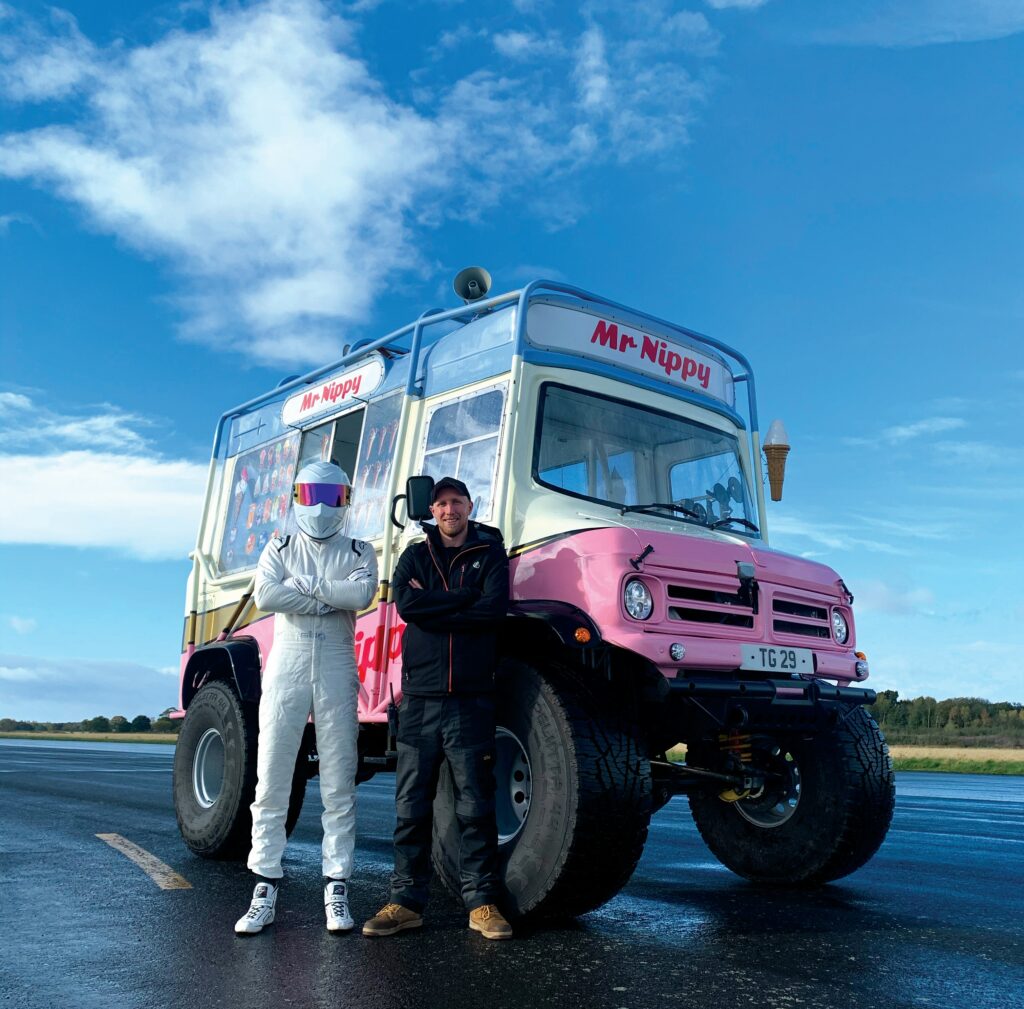
“We also did Mr Nippy – which got the world record for the fastest electric ice cream van! That was another Tesla large drive unit with a custom gearset. It had the drive unit in the middle with the prop shafts either side, so it was four-wheel drive – which is the approach a lot of people have now taken in Land Rover conversions.”
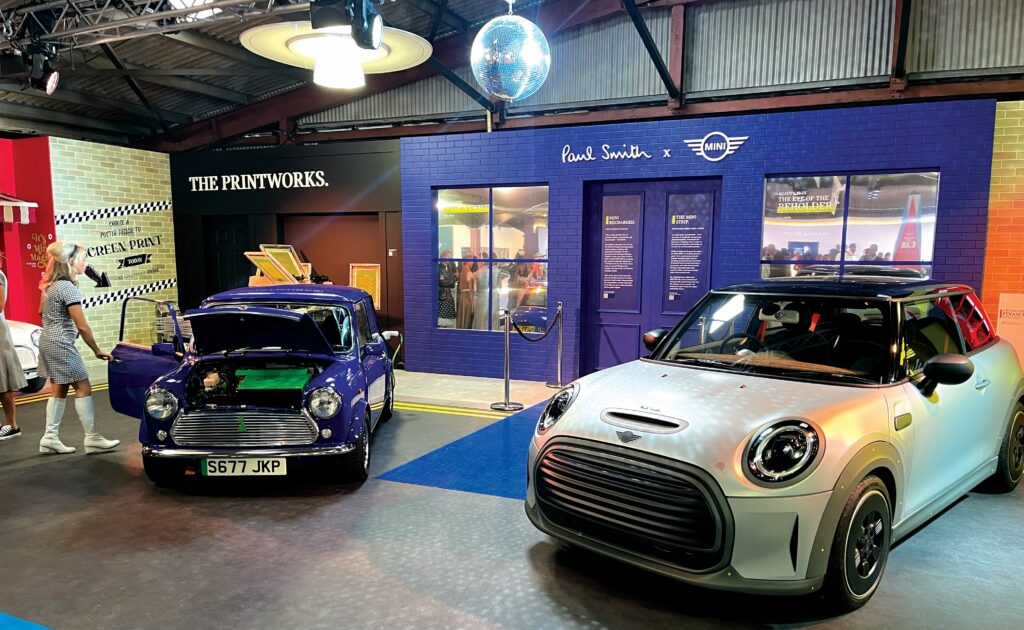
After that, the film and TV work dropped away – those in it had built up enough experience to do it themselves – but those vehicles were the bedrock on which the next phase of the business was built: custom conversion kits. They eventually developed three: a Porsche 911; a Land Rover Series 2, 3 and Defender; and a classic Mini, after a collaboration with BMW.
Tesla parts were, again, core to them all, and Hazell explains: “They were the first available parts, so everyone went for them. The modular approach they took also made them usable and serviceable, and Tesla never complained about people modifying stuff, whereas half the other OEMs would do.
“When we started, quite a few people were asking about Porsche and although doing an EV conversion is expensive, the ICE units were expensive to maintain and fix and a full refurb on a 911 engine isn’t cheap either. So, with the car’s base value already quite high, it was an obvious choice.
“The Mini came about after some BMW engineers watched some YouTube videos I did during lockdown on an MX-5 build. They were releasing the electric Mini and wanted to turn some classic Minis electric. They did Mini Sport cars; we did the drivetrains. We learned so much and it also gave us great credibility.”
Built on batteries
In the same way that the movie scene dropped away, the increasing number of conversion kit manufacturers led Fellten to explore other markets. They spotted the potential in battery packs and Hazell recalls: “They were the one thing a lot of people were still scared of: how to build them, set them up and the supply chain. So, that became a big deal for us.”
Fellten’s first battery pack, the UBP55E, was developed for the Land Rover kit and they spotted the potential to offer it up for use in other vehicles. A flat pack for Sebring Works’ Porsche Speedsters came next, followed by specialist units for the marine industry – for RS Boats and Rad Propulsion – and then military and mining vehicles.
“I’ve built a lot of high-voltage battery packs over the years and we’ve always tried to be ahead of the market, to push the boundaries,” says Hazell. “We designed all our own control systems for the contactor controller and our own CCS [Combined Charging System]. In fact, we released the first full CCS rapid-charging kit to the retrofit market.”
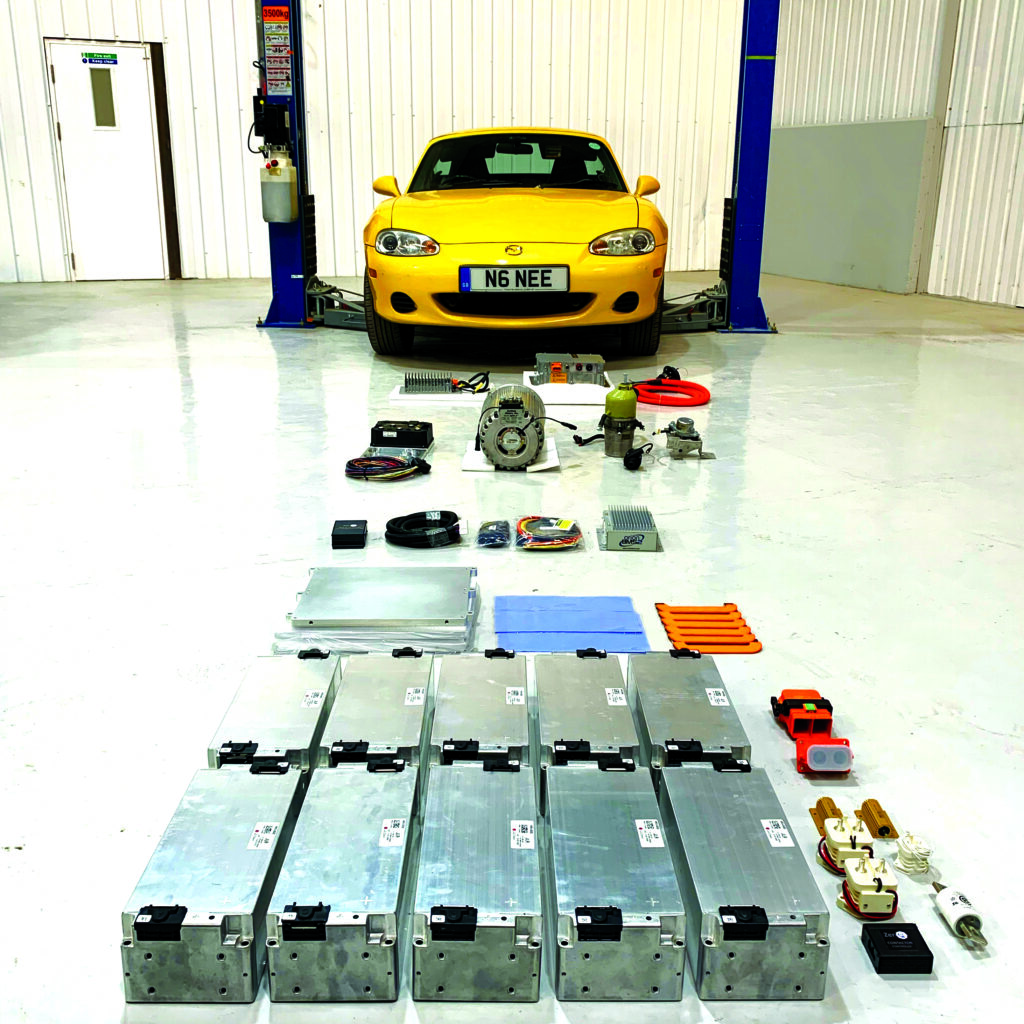
This focus on batteries also led to the creation of the Charge Qube – a mobile unit that contains second-life EV batteries. A 48 V system was first developed using Tesla modules and Victron controllers in 2020, but only in the last year, with rapid charging and high-voltage DC–DC converters and 800 V architecture, did the concept become cost-effective.
Aimed at fleet vehicles, campsites, pubs and delivery hubs, the Charge Qube uses second-life Tesla Model 3, Jaguar Land Rover or ID.3 packs with power electronics for DC rapid charging. If a location has
24 hour power but peak demand at times is higher than available, the Charge Qube tops it up. And, as a stand-alone unit, it can be moved around anywhere.
“The batteries are really good quality,” adds Hazell. “The packs stay in their original form factor, so you’ve got all the safety and certification of an OEM-level pack. Most energy storage batteries are not designed for vibration or fire, so these are actually better than some of the new storage-specific units coming in from China.
“Charge Qubes can run the batteries for another 5–15 years or more, by which point you might get value from recycling those batteries. The cost of recycling is coming down and the companies I have spoken to reckon that by then they’ll be paying for batteries, not charging people to dispose of them. Charge Qubes enable the circular economy, that’s the key.”
The next frontier
Hazell exited Fellten at the end of last year and he is now looking forward to developing his own projects. The YouTube channel, he hopes, will get more of his attention – with some brand-led stories coming, as well as a re-conversion of an old already-converted Porsche Boxster, done by his younger sister. And he might still finish that 1200 bhp camper!
He has, however, also become somewhat tired of the EV world, explaining: “You get to a point where you’re not necessarily developing and innovating as fast as you used to” and his new vision is not on the ground but up in the skies. “I want to move into satellite de-orbitisation systems,” he explains, with unsurprising confidence and bravado.
“I want to build a company that’s cleaning up space. I’ve done that on the ground, recycling old cars into EVs and building Charge Qubes, now I want to sort out all the stuff floating up there. Everyone’s launching new satellites, but if one hits some space debris, you could be stuck here and not able to get off the planet – the Kessler effect – I don’t like the idea of that.
“I’ve always wanted to do space tech, so I want to develop a solution to cheaply deorbit old satellites and space junk, exit them through the atmosphere and burn them up. Elon [Musk] has come in and gone: ‘How can I do space more cost-effectively?’ and it’s just the sum of parts. There’s no reason a satellite should cost £X million – it’s 10 kg! What the hell?”
Despite zero experience in the industry, Hazell sees a crossover with his battery and energy storage experience, and although he admits “space scares me,” he concludes: “When I started doing EVs, I had no idea what I was doing: I had to learn a lot, I made mistakes, but that’s what I like. It’s exciting!”
Click here to read the latest issue of E-Mobility Engineering.
ONLINE PARTNERS