











Battery management systems

(Image: Infineon)
The intelligent BMS is coming
Battery management systems are undergoing significant transformation, as revealed by Peter Donaldson
For decades, the battery management system (BMS) served a relatively straightforward purpose: protect the battery from operating outside its safe limits, estimate its SoC, and ensure that the vehicle could be trusted to start and stop reliably. These functions were deterministic, rule-based and, critically, completely comprehensible to the engineers who designed them. Every decision could be traced to a specific input, a defined threshold or a calibrated model. Today, however, things are becoming significantly more complex than that.
The battery has evolved from a passive energy storage component to an active, data-generating asset. The BMS is transforming from a safety-oriented controller into an intelligent operating system capable of prediction, adaptation and economic optimisation. This transformation is driven by three converging forces: the complexity of modern battery chemistries, the proliferation of connectivity and cloud computing, and the growing recognition that battery intelligence represents significant economic value.
Yet, this evolution introduces profound engineering challenges. An industry built on deterministic safety now has to wrestle with the probabilistic nature of AI. It is faced with balancing the computational demands of high-fidelity physics models against the scalability requirements of global fleets. It must also ensure that a battery remains safe when it is disconnected from the cloud. Furthermore, it is faced with designing systems that can adapt to battery chemistries as yet not deployed or even fully developed.
AI as enhancement, not replacement
The most striking consensus emerging from the industry is that AI cannot – and should not – replace deterministic safety functions. Every engineering leader interviewed emphasised that safety-critical decisions must remain traceable, verifiable and, ultimately, understandable to the engineers responsible for them.
This position reflects a mature understanding of both the capabilities and the limitations of AI. Machine learning excels at identifying patterns in complex, high-dimensional data. It can extract information from operating conditions that are difficult to model from first principles. It can adapt to new data and improve over time. But it is also opaque, prone to unexpected behaviour when presented with conditions outside its training distribution – the dataset of historical battery behaviour in terms of voltage curves, temperature fluctuations, current loads, ageing patterns etc fed to the AI – and fundamentally probabilistic in nature.
The automotive industry’s safety culture, built on decades of experience with ISO 26262 and rigorous verification processes, is not well suited to accepting outputs that cannot be traced back to deterministic causes.
The solution emerging across the industry is a hybrid architecture. Physics-based models – grounded in electrochemical understanding and validated through extensive testing – provide the foundation for core safety functions. AI operates as an enhancement layer, improving prediction quality for complex phenomena such as ageing, degradation and anomaly detection. Crucially, every AI output is checked against physical constraints and deterministic models to ensure plausibility.
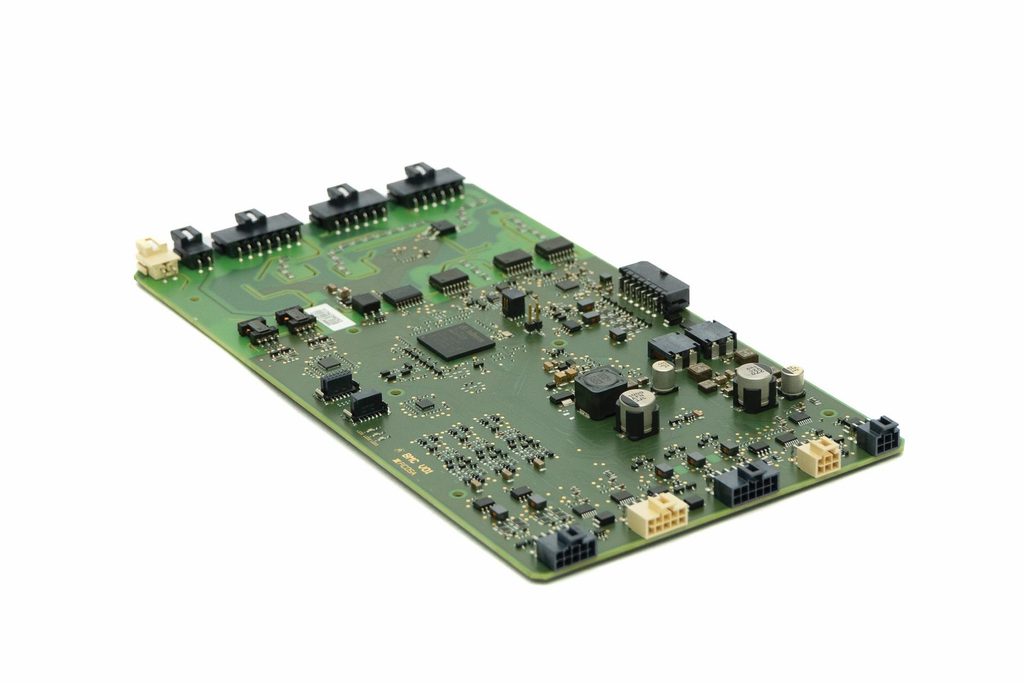
(Image: Ficosa)
This approach is particularly valuable for modern battery chemistries. Lithium iron phosphate cells, for example, with their characteristically flat voltage curves, present significant challenges for conventional SoC estimation. Machine learning can extract information from historical operating patterns that is difficult to capture with conventional approaches alone. But AI’s output is continuously validated against physical understanding, preventing the model from generating impossible results.
The engineering principle is clear: trust is built through verification, traceability and the ability to audit decisions. The most successful architectures will be those where data science and battery physics complement each other, rather than compete. Safety-critical decisions will continue to rely on explainable, physics-grounded models, while AI’s contribution centres on predictive diagnostics and fleet learning.
A hierarchy of models
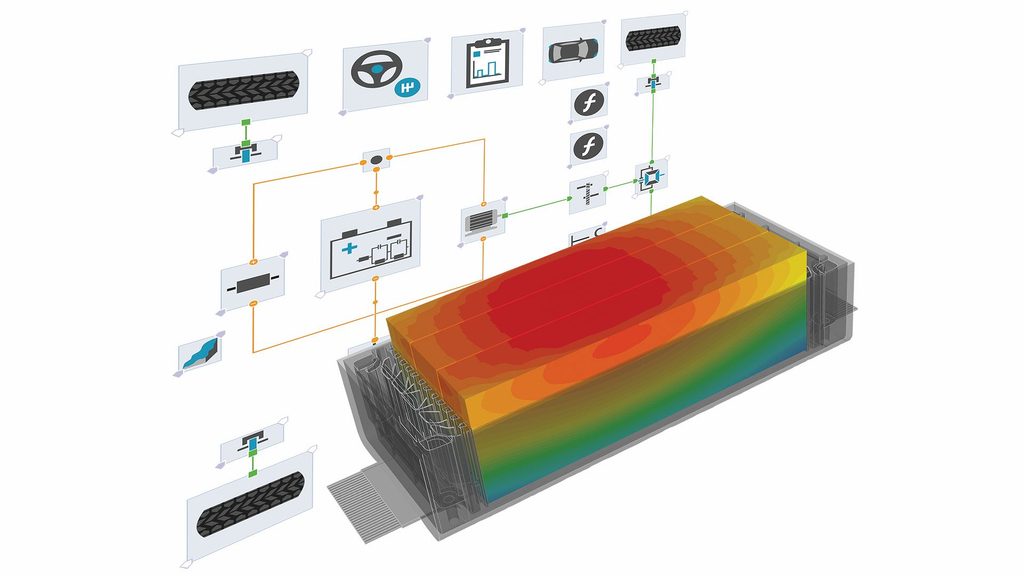
The concept of a digital twin has become ubiquitous in discussions of battery management, but it is often misunderstood. Industry leaders are increasingly clear that a digital twin is not a single model but a hierarchy of models operating at different levels of fidelity and computational complexity.
At the vehicle level, the BMS uses efficient onboard models optimised for real-time operation. These models must provide accurate estimates of SoC, SoH, state of function and state of energy while operating within the strict computational limits of automotive microcontrollers.
In parallel, cloud-based battery twins leverage fleet data, sophisticated electrochemical models and machine learning techniques to analyse degradation trends, usage patterns and abnormal behaviour. The cloud environment provides the scalability necessary to process data from thousands or millions of connected batteries simultaneously.

The critical engineering challenge is synchronisation between these layers. Insights generated in the cloud – improved calibration parameters, updated ageing models, predictive maintenance information – must be translated into actionable intelligence that can be transferred back to the vehicle. This requires careful attention to data formats, validation processes and the timing of updates.
A particularly significant bottleneck in moving from model-level to pack-level twins is the quality and observability of data. A cell-level twin can focus on the behaviour of an individual cell under carefully controlled laboratory conditions. A pack-level twin must accurately represent thousands of interacting variables operating under highly dynamic real-world conditions.
The solution adopted by leading engineering organisations is a hierarchical modelling strategy. Rather than attempting to model every physical phenomenon at the highest level of detail, they selectively combine high-fidelity models where necessary with reduced-order models where scalability is more important. Validation is equally critical – a digital twin is only as valuable as its correlation with reality – and it requires heavy investment in characterisation testing, cell-in-the-loop methodologies, hardware-in-the-loop testing and fleet-data validation.
The vision for the future is one in which digital twins will be systems that learn continuously and improve throughout the battery’s operational life. Battery optimisation will not stop at the beginning of production but will become a continuous engineering process enabled by a connected ecosystem of onboard intelligence and cloud-based learning.
Safety in a connected world
The integration of cloud-based intelligence raises a fundamental question: what happens when the cloud is unavailable? Network latency, connectivity loss or cybersecurity incidents could potentially compromise cloud-dependent functions.
The industry’s response is unambiguous. Safety-critical functions must remain entirely onboard and must never depend on external connectivity.
This principle drives a clear separation of architecture. The deterministic onboard BMS is responsible for real-time control and functional safety – contactor control, thermal protection, insulation monitoring, power limitation and fault handling.

(Image: Infineon)
Cloud intelligence serves a different purpose. It enhances diagnostics, improves degradation prediction, enables fleet learning and creates opportunities for lifecycle optimisation. These functions can tolerate communication delays because they are advisory rather than safety-critical.
Some organisations further refine this approach by treating cloud-derived parameters and updates with appropriate scepticism. Updates are accepted only after authenticity, integrity, version and plausibility checks. Until these checks pass, the validated local configuration remains in force.
Adapting to diverse environments
Electrification is expanding beyond passenger vehicles into commercial transport, maritime applications and aviation. Each environment introduces unique challenges that the BMS must address.
The fundamental challenge is that battery physics remains the same while operating conditions change dramatically. For automotive applications, the primary concerns are temperature variation, mechanical loads, ageing and abuse conditions. In aviation, rapid altitude changes affect thermal behaviour, cooling effectiveness and pressure-related phenomena. Radiation effects are also critical at high altitude, with one particular risk being that of a single-event upset impacting BMS electronics. Understanding radiation impacts on lithium-ion chemistries comes from space applications, but further study is needed in relation to aviation. In marine applications, saltwater exposure introduces additional risks related to corrosion, isolation monitoring and long-term reliability.
The response to this diversity is a modular approach. The same core battery algorithms can be adapted through calibration and application-specific validation processes. This allows engineering organisations to support passenger vehicles, commercial vehicles, stationary storage systems, marine applications and aerospace platforms while maintaining a common technological foundation.
Thermal management emerges as a particularly important differentiator. Future batteries will require increasingly sophisticated thermal prediction models capable of detecting local hotspots, thermal propagation risks and abnormal operating conditions before they become safety issues. This is especially critical in aviation applications where cooling effectiveness changes with altitude and where weight constraints limit thermal management options.
(Image: AVL)
Diagnostics are equally important. As battery packs become structurally integrated and more difficult to access, early anomaly detection and predictive maintenance capabilities become essential. The BMS must be able to identify developing problems without physical inspection.
The evolution toward diverse applications is driving the BMS toward even deeper model-based supervision.
Computing constraints, architectural solutions
The computational demands of modern BMS functions are growing rapidly. Battery engineers have ambitious requirements for diagnostics, state estimation, cybersecurity, thermal prediction, anomaly detection and fleet connectivity. All these functions must execute within strict automotive constraints for processing power, memory, cost, energy consumption and safety.
The tightest constraint is typically at the pack edge, where advanced electrochemical models, observers, diagnostics and AI inference must run in real time within fixed budgets.
The answer is not simply to move everything to the cloud. Engineers must carefully allocate functions across the computing continuum, using reduced-order models, simplifying non-linearities, reducing dimensions and scheduling functions at different rates.
Cost and power consumption remain the primary constraints for hardware design, directly impacting the amount of memory and computational power available within the BMS. Real-time execution is the second major bottleneck. Safety-critical functions require continuous, deterministic monitoring, which means managing multiple tasks and interrupts simultaneously. Software architecture must prioritise tasks based on available computational power and cores.
Advanced algorithms, such as state estimators or digital-twin models, quickly exceed the computational limits typically available in a standard BMS microcontroller. This has led to a growing trend toward distributing the workload: safety-critical functions remain inside the BMS, while complex algorithms run on high-performance microprocessors.
Cybersecurity adds another layer of demand. Secure communication, encryption, authentication and update mechanisms consume additional resources and must be factored into hardware design early to prevent rapid platform obsolescence.
At the semiconductor level, several trends are converging to address these challenges. Functional safety is being enhanced through greater use of lockstep processing, hardware diagnostics, protected memories and independent monitoring. Cybersecurity is being addressed through hardware security modules, secure boot, protected key storage and authenticated software updates. Heterogeneous compute architectures combine general-purpose safety cores with dedicated mathematical and vector accelerators so that model-based control and AI can run locally and deterministically.
Energy efficiency is also critical. The BMS must remain vigilant during driving, charging, storage and extended parking periods. This requires careful attention to power consumption in all.
The architectural trend is toward a coordinated chipset and software ecosystem rather than optimising each component in isolation.
Preparing for the unknown
Battery chemistries are evolving rapidly. Lithium iron phosphate, high-nickel chemistries and future solid-state batteries all exhibit fundamentally different behaviour. The industry cannot afford to redesign the entire BMS for every new chemistry.
The solution is a modular battery core function architecture. The objective is to keep the software framework stable while adapting battery behaviour through models, calibration and parameterisation.
Rather than creating separate software for each chemistry, leading organisations use a common platform architecture with adaptable battery models and calibration workflows. This approach allows the same fundamental software structure to support multiple cell technologies while maintaining high accuracy.
This separation is achieved through clear architectural boundaries. Platform services – measurement acquisition, diagnostics, communication, safety mechanisms, non-volatile data handling and scheduling – remain common across chemistries. Chemistry-dependent models – open-circuit-voltage maps, impedance parameters, thermal behaviour, ageing models and operating limits – are encapsulated as calibrated components.
A new chemistry can be introduced by validating and releasing the relevant model and parameter set rather than redesigning the entire software platform. Hardware headroom is equally important because more sophisticated chemistries may require higher-order or non-linear models.
Chemistry-agnostic does not mean chemistry-unaware. Every parameter set, estimator and limit must still be validated for the specific cell, pack design and mission profile. The architecture enables adaptation, while rigorous engineering ensures correctness.
BMS as value creator
Historically, the BMS was designed to maximise safety and lifetime. These objectives remain essential, but operators now expect batteries to participate actively in value creation throughout their lifecycle.
Vehicle-to-grid (V2G) operation provides a compelling example. A BMS that understands battery condition with high accuracy can optimise charging and discharging decisions based on both grid demand and battery health. The objective is to capture additional revenue without accelerating degradation.
Battery lifecycle management is another area of opportunity. Accurate estimation of SoH creates transparency around residual battery value, which is critical for leasing models, second-life deployment, warranty management and energy storage applications.
Cloud-connected battery analytics are becoming particularly important here. Fleet data allows operators to understand how batteries are ageing, predict maintenance requirements and make better economic decisions. AI further expands these possibilities by identifying hidden usage patterns and translating them into operational recommendations.
The future BMS will be an intelligent battery operating system that not only protects the battery and optimises performance but also helps customers maximise the economic value of the asset throughout its entire lifecycle. Over the next decade, the ability to monetise battery intelligence may become just as important as traditional battery performance metrics.
The way forward
The transformation of the BMS from a safety controller to an intelligent operating system represents one of the most significant engineering challenges in the e-mobility industry. It requires integrating disciplines that have traditionally operated separately: battery physics, software engineering, data science, semiconductor technology and application-specific domain knowledge.
Several principles are emerging as essential to success in this transformation.
First, safety must remain non-negotiable. AI can enhance diagnostic and predictive capabilities, but safety-critical decisions must remain deterministic, traceable and verifiable.
Second, digital twins are not single models but hierarchies of models. The future is a connected ecosystem of onboard intelligence and cloud-based learning, not a monolithic simulation.
Third, architecture matters as much as chemistry. The ability to adapt to new chemistries, new applications and new computing paradigms will depend on modular, scalable architectures that separate platform services from application-specific models.
Fourth, hardware enables software. Better sensing, increased computing performance and flexible architectures unlock new software capabilities. The most valuable hardware innovation is the one that enables new functions.
The engineers designing these systems face a complex trade-off, balancing accuracy against interpretability, computational intensity against scalability, innovation against validation and feature richness against cost. They must design for chemistries that do not yet exist and applications that have not yet been imagined.
The successful engineering organisations will be those that embrace this complexity, building systems that are simultaneously robust and adaptable, safe and intelligent, deterministic and data-driven. The future of battery management is not about choosing between physics and AI or between onboard and cloud computing. It is about combining them in architectures that deliver the best of all worlds.
Acknowledgements
The author would like to thank the following people for their help with this article: experts from AVL; Jaume Prat Terradas, engineering director for e-mobility at Ficosa; and Mahmoud Ismail, director of application marketing – automotive energy management at Infineon Technologies AG.
Click here to read the latest issue of E-Mobility Engineering.
Some suppliers of battery management systems
| AVL | www.avl.com |
| BorgWarner | www.borgwarner.com |
| Bosch | www.bosch-mobility.com |
| CATL | www.catl.com |
| Eberspächer | www.eberspaecher.com |
| ElringKlinger | www.elringklinger.com |
| Ficosa | www.ficosa.com |
| Infineon Technologies | www.infineon.com |
| Leclanché | www.leclanche.com |
| Pulsetrain | www.pulsetrain.com |
| Potenza Technology | www.potenzatechnology.com |
ONLINE PARTNERS