





AkzoNobel’s Resicoat targets corrosion and insulation in next-generation EV components
(Image: AkzoNobel)
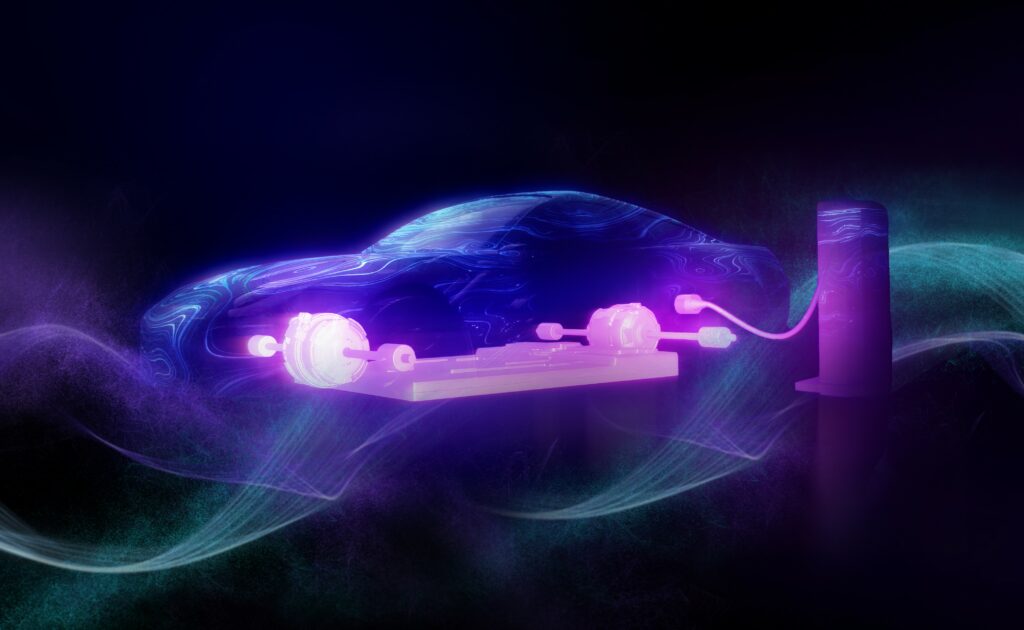
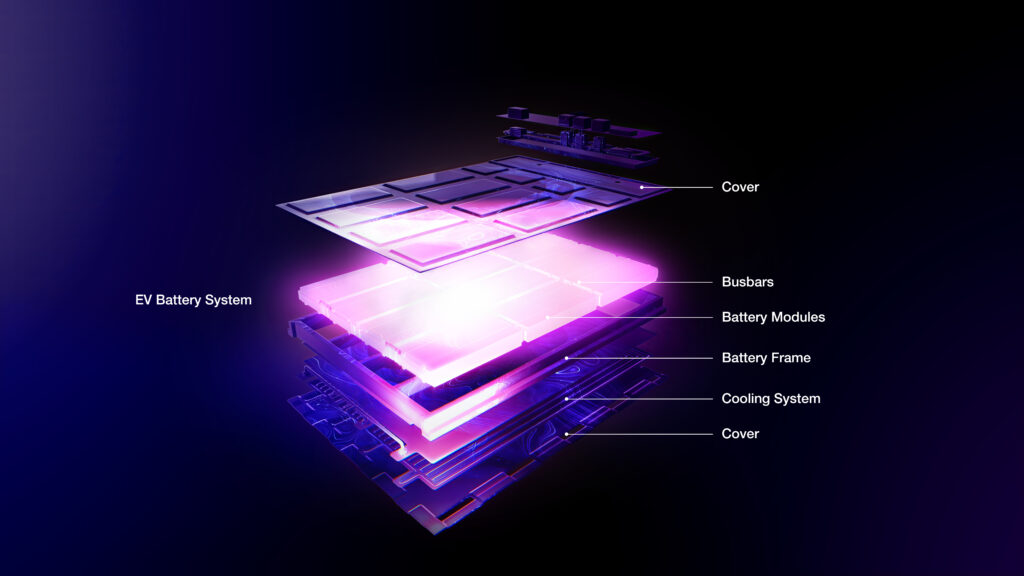
As EVs migrate to higher voltages and more aggressive operating environments, the demand for protective coatings has shifted from passive defence to active engineering. Components such as battery housings and cooling systems face electrochemical and physical stressors far beyond those of traditional underbody parts, writes Peter Donaldson. These components undergo continuous thermal cycling that induces repeated expansion and contraction. Over time, this leads to mechanical stress and coating fatigue if not properly managed. Compounding this, exposure to electrolytes, moisture, and corrosion risks equivalent to or exceeding C4-level conditions demands a new generation of protective strategies, says Gustavo Carvalho, automotive global key account management and new business development director at AkzoNobel Powder Coatings.
Corrosion protection with dielectric strength
When designing battery housings or cooling systems, a central challenge is maintaining a robust anti-corrosion barrier while simultaneously providing high dielectric strength, Carvalho points out. While these two properties are driven by specific material characteristics, AkzoNobel’s Resicoat epoxy-based powder coatings are engineered to deliver both, he emphasises. By optimising raw material interactions, these formulations achieve high-resistance barriers that interrupt galvanic circuits — a critical feature given that galvanic corrosion from dissimilar metal contact is among the most common causes of failures in EVs.
Other common corrosion risks include seal degradation over time, which allows moisture ingress, and coolant ageing, where the coolant itself becomes more aggressive. To mitigate these, the coatings are designed with strong adhesion to selected sealants, supporting system integrity and helping prevent coolant leakage.
Beyond salt spray
Standard salt spray testing alone does not reliably reflect long-term field performance. The industry is therefore placing stronger emphasis on temperature cycling and thermal shock testing. These methods better simulate the repeated heating and cooling that EV components experience in operation. Resicoat products are validated against established standards (UL, IEC, SAE), demonstrating consistent insulation and protective performance under these regimes, Carvalho says. “By combining these tests with application-specific evaluations, we can more closely replicate real-world conditions — including mechanical stress and environmental exposure — to ensure reliable coating performance over time.”
As sustainability requirements tighten, concerns arise over whether reduced material usage and lower curing energy can coexist with 15-plus-year corrosion protection. At AkzoNobel, this has led to a new approach. “We are moving beyond traditional high-temperature curing by developing specialised chemistries and more efficient application methods that deliver the required performance at lower energy input,” Carvalho notes.
“Advanced digital tools developed with partners such as coatingAI help optimise coating processes to ensure consistent quality. And solutions like our Eco+ Cure energy calculator help customers identify opportunities to improve energy efficiency without impacting coating performance.”
(Image: AkzoNobel)
Urban and industrial corrosion
With charging stations becoming ubiquitous in coastal and urban industrial environments (C4/C5 conditions), unique corrosion challenges emerge. Cooling fans can draw salty mist and industrial pollutants into housings, where deposits accumulate on sensitive components like circuit boards. Over time, these deposits absorb moisture, forming conductive and corrosive layers that threaten both corrosion resistance and electrical performance.
Coating solutions for public chargers exhibit both commonalities and differences from those for under-battery plates, Carvalho points out. While the core principles — adhesion, corrosion protection, edge coverage, and dielectric strength — remain the same, performance priorities diverge. “For battery plates, the focus is on dielectric integrity and thermal management,” he explains. “The coating must support heat dissipation while withstanding stone chipping.” For public chargers, weather resistance becomes the primary consideration. “These systems are exposed to UV radiation, salt spray, and industrial pollutants over long periods. While they are not subject to mechanical impact in the same way as vehicle components, they require strong resistance to environmental degradation, including UV-induced chalking and continuous exposure to corrosive conditions.”
The path to reliable long-term protection lies in matching coating chemistry to specific stressors — thermal cycling, galvanic potential, and environmental ingress. By moving beyond traditional salt spray tests toward thermal shock validation, and by balancing dielectric strength with corrosion resistance, modern powder coatings are evolving to meet the C4-equivalent and higher demands of next-generation EVs and their supporting infrastructure.
Click here to read the latest issue of E-Mobility Engineering.
ONLINE PARTNERS