


Royal Waste Services grows Mack LR Electric fleet as New York tests zero-emission refuse trucks
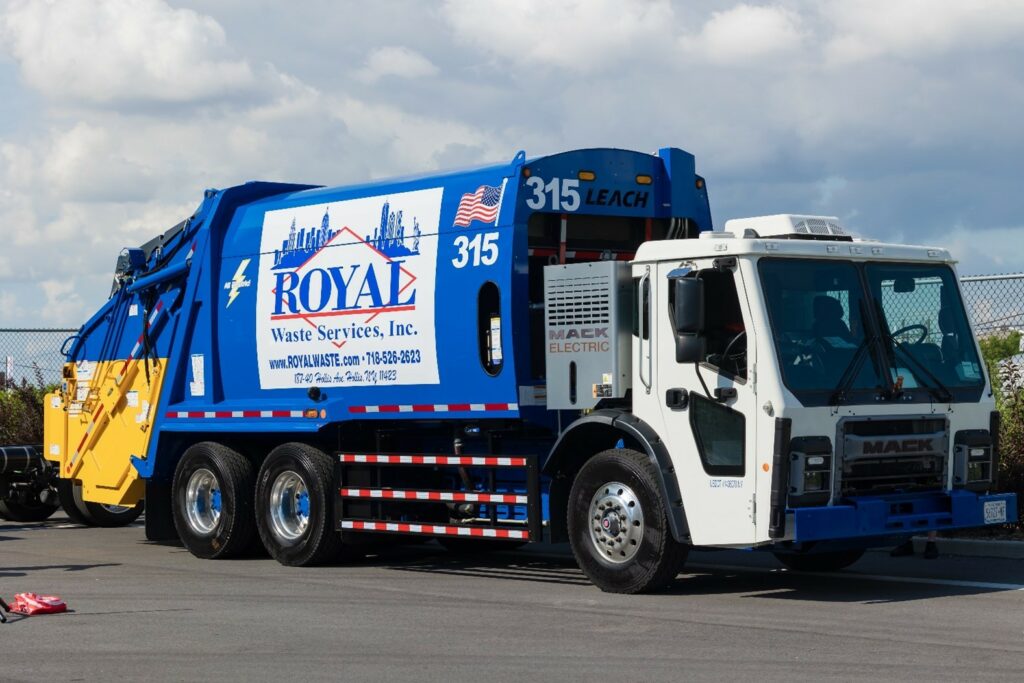
(Image courtesy of Mack LR Electric)
Royal Waste Services is scaling up its use of battery-electric refuse trucks in New York City with an order for three additional Mack LR Electric vehicles, extending a trial that has already proved the platform’s suitability for dense urban routes. The Waste Connections subsidiary began operating its first LR Electric in December 2025 and has since logged more than 500 miles, collecting around 600 tons of municipal solid waste without any recorded downtime. That metric is critical in refuse operations, where tight daily schedules leave little room for mechanical failure.
The expansion is supported by the New York Truck Voucher Incentive Program, which offsets the upfront cost of zero-emission vehicles as part of broader state efforts to cut greenhouse gas emissions and improve air quality in heavily burdened communities. Royal Waste received its first LR Electric through “The Bronx Is Breathing,” a strand of the New York Clean Transportation Prizes program targeting cleaner transport in underserved areas, and refuse collection is emerging as a useful real-world test bed for heavy-duty electrification.
In service, the first truck handles around 75 tons of waste per week and has maintained 100 percent uptime since deployment. Drivers report lower fatigue, attributing it to the lack of engine vibration and to more precise control in stop-start traffic compared with conventional diesel units.
The LR Electric is built around a 376 kWh battery pack and a dual-motor powertrain producing 448 continuous horsepower and 4,051 lb ft of peak torque from standstill, matching the frequent acceleration and braking cycles of a refuse route. Energy is stored across four NMC lithium-ion battery modules and replenished via a 150 kW SAE J1772-compliant DC charging interface. A two-stage regenerative braking system recovers energy during the hundreds of stops these trucks make each day, cutting friction brake wear and reducing overall energy consumption.
Click here to read the latest issue of E-Mobility Engineering.
ONLINE PARTNERS