













High-voltage solid-state battery
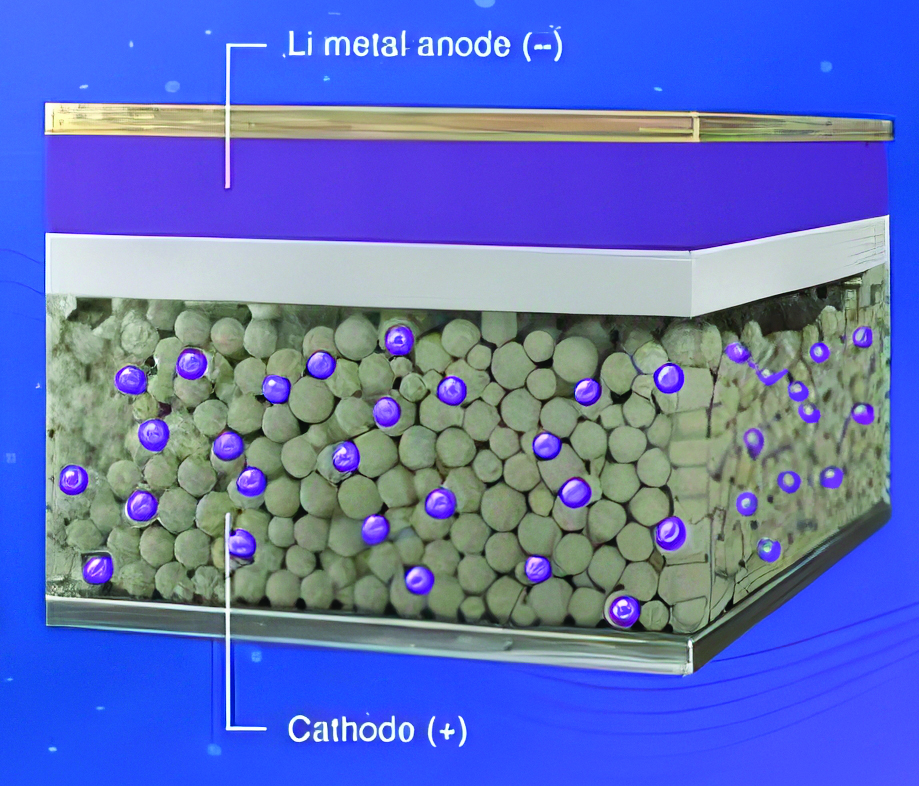
(Image: Yonsei University)
Researchers in South Korea have developed an all-solid-state battery (ASSB) with an output of over 5 V, significantly higher than that of other batteries, writes Nick Flaherty.
The team at Yonsei University developed a fluoride-based solid electrolyte that enables ASSBs to operate beyond 5 V safely with a spinel electrode, addressing the long-standing barrier in battery science of achieving high-voltage stability without sacrificing ionic conductivity (as occurs with conventional solid electrolytes that tend to break down above 4 V).
The higher voltage means fewer cells would be required in a battery pack, reducing the weight and cost of a system and extending the range.
“Our fluoride solid electrolyte, LiCl–4Li2TiF6, opens a previously forbidden route for high-voltage operation in solid-state batteries,” said Professor Yoon Seok Jung, who led the team.
The team overcame this limitation by developing a fluoride solid electrolyte that remains stable beyond 5 V and exhibits Li+ conductivity of 1.7 x 10⁻⁵ S/cm at 30 C, which is one of the highest in its class. This allows spinel cathodes such as LiNi0.5Mn1.5O4 (LNMO) to operate safely and efficiently, even under demanding cycling conditions.
Experimental results show a battery cell retains over 75% capacity after 500 cycles and supports a high areal capacity of 35.3 mAh/cm², a record for solid-state systems. The team also demonstrated a pouch cell that operates down to 2.3 V with an energy density of 258 mAh/g and ultrathick1.8 mm electrodes.
Click here to read the latest issue of E-Mobility Engineering.

ONLINE PARTNERS