














CPCV algorithm reduces harmonics in EV charging
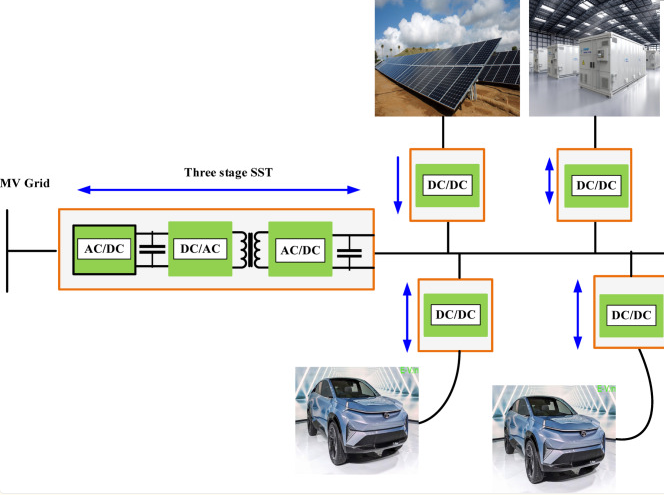
(Image source: PubMed)
Researchers in China have developed a constant power, constant voltage (CPCV) algorithm that can reduce the total harmonic distortion (THD) in EV charging networks, writes Nick Flaherty.
Harmonic distortion is produced throughout battery charging and is not sufficiently addressed by conventional charging algorithms such as Constant Current Constant Voltage (CCCV), say researchers at Hanjiang University in Hubei Shiyan. This harmonic distortion can reduce the efficiency of the power network and reduce the power quality.
These non-sinusoidal harmonic currents have the ability to alter the power waveform and cause a number of problems, including higher losses, equipment overheating and interference with delicate loads. Various factors, including the type of EV, the charging infrastructure and the operating conditions might affect the degree of harmonic distortion.
To address this, the CPCV charging algorithm dynamically modifies the charging power according to the state of charge of the battery in the vehicle. Compared with conventional techniques, this more efficiently controls harmonic emissions and enhances power quality.
The reason for this is that the continuous power supply provided throughout the CV phase may lead to a boost in energy loss, which eventually lowers charging efficiency.
CPCV also boosts efficiency by guaranteeing a power factor that is almost constant throughout all charging conditions, maximising energy use.
Click here to read the latest issue of E-Mobility Engineering.
ONLINE PARTNERS